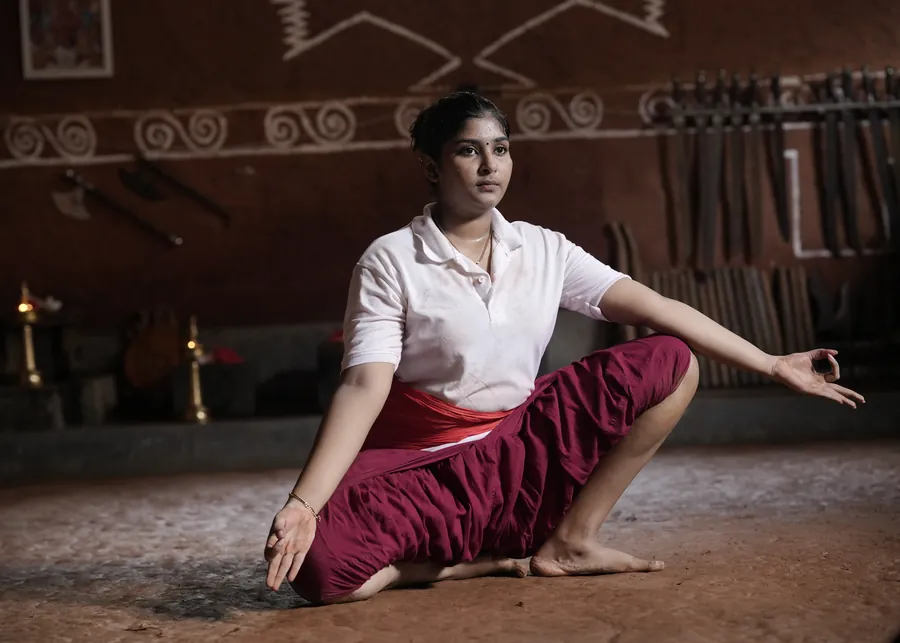
Kalaripayattu is for women as much as for men. Women have practised Kalari in Kerala for generations, and the training is the same for everyone: the same exercises, the same discipline and the same path.
If you are a woman thinking about Kalari, you probably have practical questions. What should I wear? Where will I stay? Can I train during my period? Who will give me a massage? This guide answers them, based on how things work at Athma Kalari.
Women in Kalaripayattu
Women are part of Kalari's long history. The northern ballads of Kerala, the Vadakkan Pattukal, include stories of women who trained in the kalari and were skilled with weapons.
Today, women train in kalaris across Kerala and around the world. Some of the best-known Kalari practitioners alive today are women, and women also teach their own students. In the kalari, nobody is treated differently because of gender. Each student is judged by their effort and attention.
Women's Kalari training in Kerala at Athma Kalari
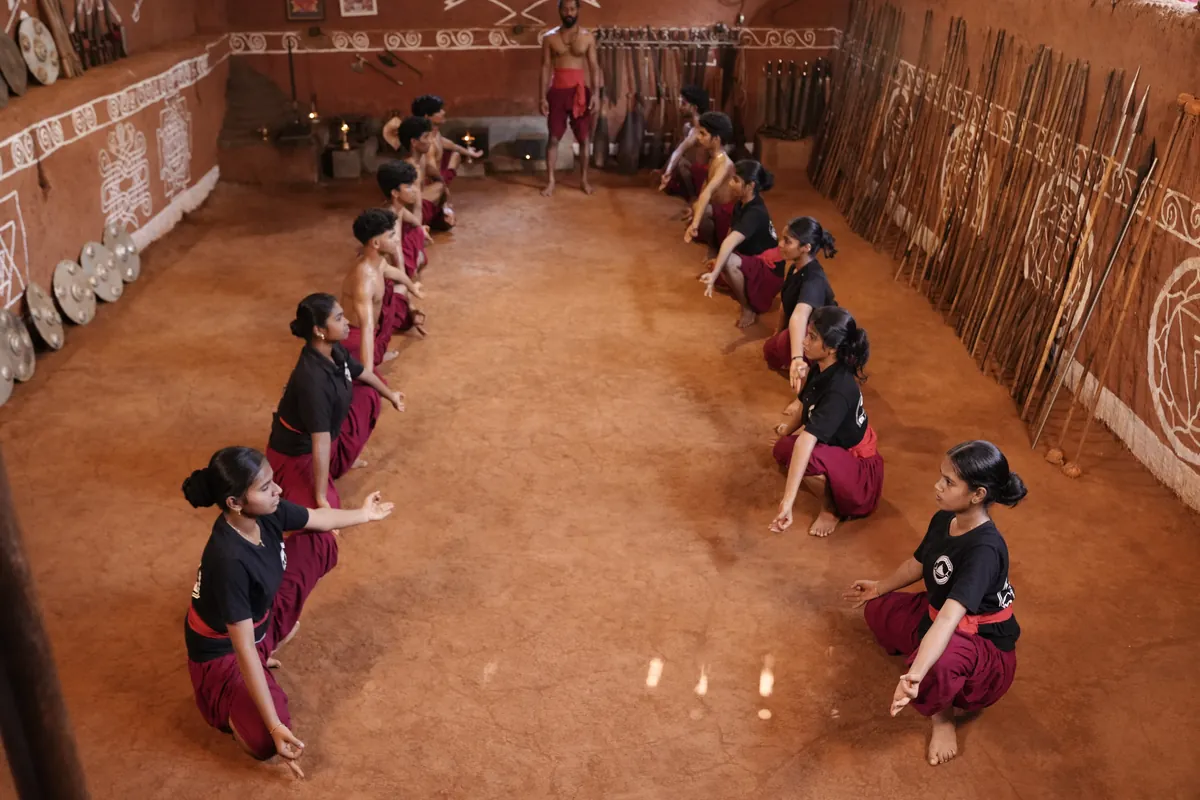
At the gurukulam, women and men train together in the same kuzhi kalari, the traditional pit kalari. Ashan Vipin Das teaches every student. He sets each student's pace by their body and progress, not by their gender.
Training is twice a day, at 5:30 AM and 5:30 PM, for 2 to 2½ hours each. Sundays are off. No experience is needed. Beginners train alongside returning students, and advanced students help guide beginners.
Rooms and privacy
- The women's dormitory, our basic option, is separate and has its own bathroom.
- Women's private rooms are also separate, with their own bathroom.
- Other options include single huts, deluxe rooms and apartments 1.5 km away.
You can see every room type, the food and the house rules on our accommodation page.
Female therapists for women
Kalari massage and treatment are a big part of life at the gurukulam. Women are treated by female therapists. This includes Uzhichil, the oil massage many students take during training, and Kizhi, the heated herbal bundles.
Kalari dress for ladies: what to wear
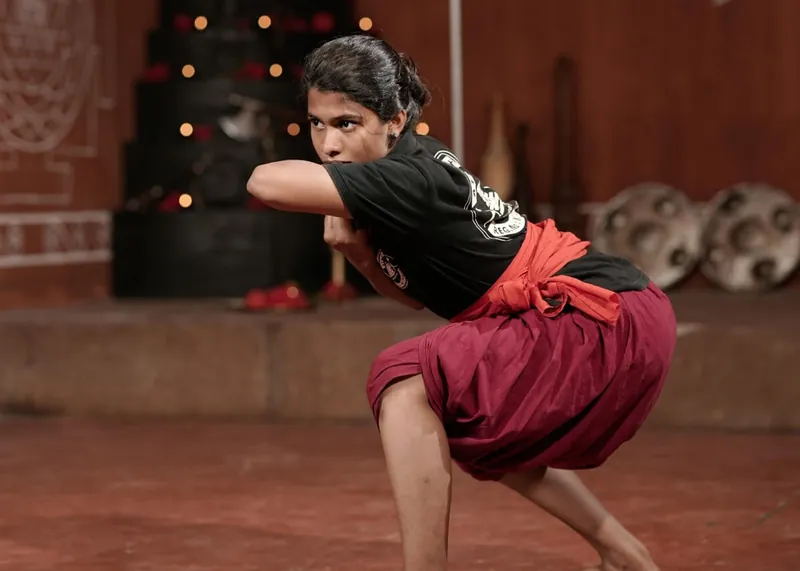
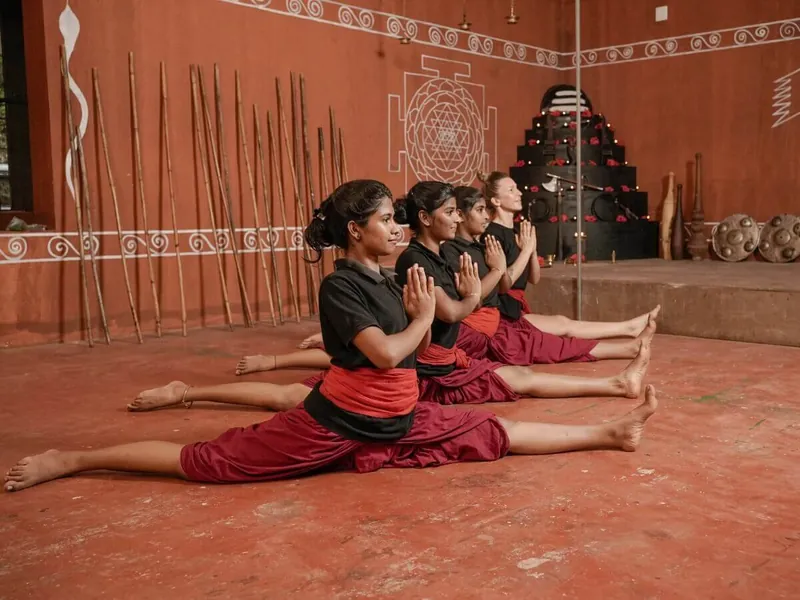
The traditional Kalari training cloth is the uduthuketti, also called the kacha. It is a long cloth wrapped and knotted at the waist. It holds the waist firmly and keeps the legs free for kicks and low stances. Women and men wear the same cloth. Read more about it in our guide to the Kalaripayattu dress and kacha.
With the kacha, women usually wear:
- A fitted cotton top or T-shirt that stays in place when you bend low or jump.
- Fitted leggings or loose cotton trousers that let you squat and kick freely.
- No jewellery. Tie long hair back firmly.
Choose cotton. It takes sweat and oil better than synthetic cloth. Kalari is practised barefoot, so you do not need shoes in class. Bring 3 to 4 sets of loose practice clothes for your stay.
Choosing your uduthuketti size
| Size | Waist | Length |
|---|---|---|
| Small | 27 inch | Knee length |
| Medium | 31 inch | Calf length |
| Large | 33.5 inch | Ankle length |
If you are between sizes, take the larger one. The Kalari Uduthuketti costs ₹1,250. You can also buy one when you arrive at the gurukulam.
Training during your period
Every body is different. Some women train as usual during their period. Some prefer a lighter class, and some rest for 1 or 2 days.
Talk to the teacher about what feels right for you. You do not need to explain more than you want to. He can give you lighter work, such as gentle stretches or footwork in place of jumps.
If you are pregnant, or think you may be, speak to your doctor before you train, and tell the teacher.
What Kalari training builds
- Strength. Low stances, squats and jumps build strong legs, hips and core. You train with your own body weight.
- Flexibility. Kicks and stretches open the hips, the backs of the legs and the spine over time.
- Balance and control. The animal postures (vadivu) teach you to hold your weight low and steady.
- Confidence. Learning to move with power, and later to hold a stick, can change how you feel in your own body.
- Focus. Each session asks for full attention, which leaves little room for other worries.
Kalari is not a weight-loss plan and not a treatment. It is a martial art. The changes come slowly, from regular and honest practice.
Is Kalari useful for self-defence?
Kalari builds balance, reflexes, a sense of distance and awareness. These help in any difficult situation. But it takes years before a martial art can be used under pressure, and the best self-defence is to notice danger early and avoid it. We explain this honestly in Is Kalaripayattu dangerous?
FAQs
Q: Can women learn Kalaripayattu?
A: Yes. Women have practised Kalari for generations, and the training is the same for women and men.
Q: Are there separate Kalari classes for ladies?
A: At Athma Kalari, women and men train together in the same class. The women's dormitory and women's private rooms are separate, with their own bathroom.
Q: What is the Kalari dress for ladies?
A: The uduthuketti, also called the kacha, worn with a fitted cotton top and leggings or loose cotton trousers. It is the same cloth men wear.
Q: Can I train during my period?
A: Talk to the teacher. Some women train as usual, and some take lighter work or a rest day.
Q: Will a woman give me my massage?
A: Yes. Female therapists treat women at the gurukulam.
Q: Do I need to be fit before I start?
A: No. No experience is needed. Training starts with simple body exercises and builds slowly.
Plan your stay
Many women coming for the first time choose Kalari Parijaya, our 1-month program. You can compare programs and prices on the residential programs page, and write to us with any question before you book.