Kalaripayattu is not dangerous when it is taught the traditional way. Students train the body first and take up weapons only years later, always with a teacher watching. Most injuries come from skipping steps, not from the art itself.
Like any martial art, Kalari has real risks. You kick high, jump, drop into deep stances and, in time, train with sticks and blades. This page explains where injuries come from, how they are avoided, what Kalari is really good for in self-defence, and who should talk to a doctor before starting.
Why the traditional order keeps you safe
Kalaripayattu is taught in 4 stages, in a fixed order:
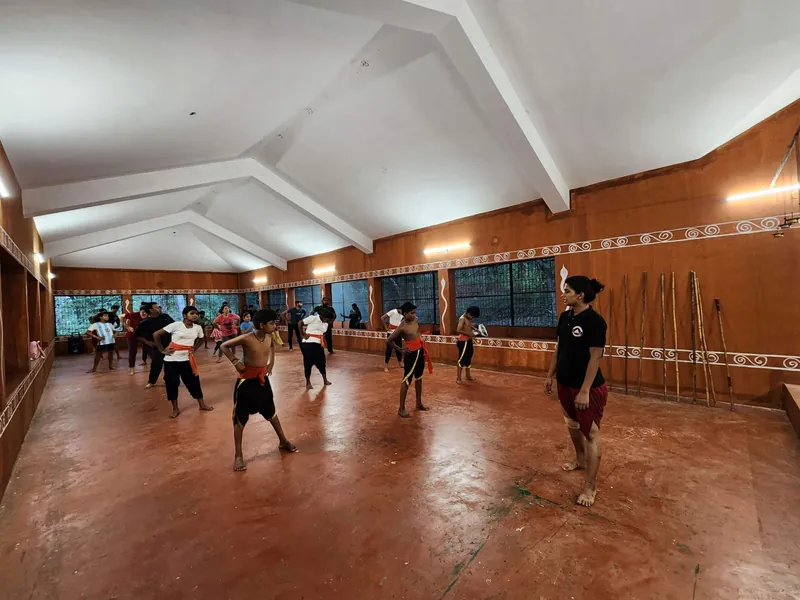
- Meithari: body training. Kicks, footwork, jumps, animal postures and body sequences.
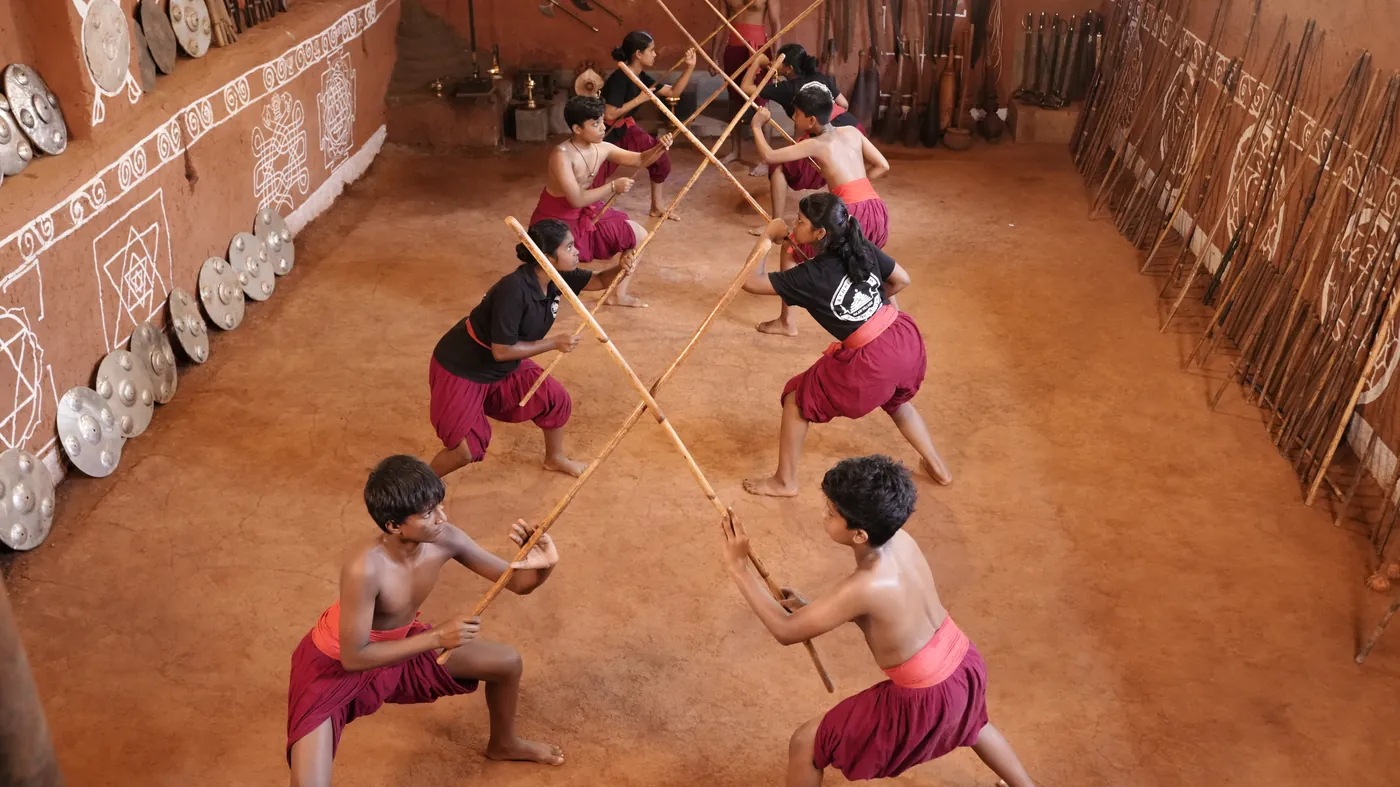
- Kolthari: wooden weapons, such as the long staff and the short stick.
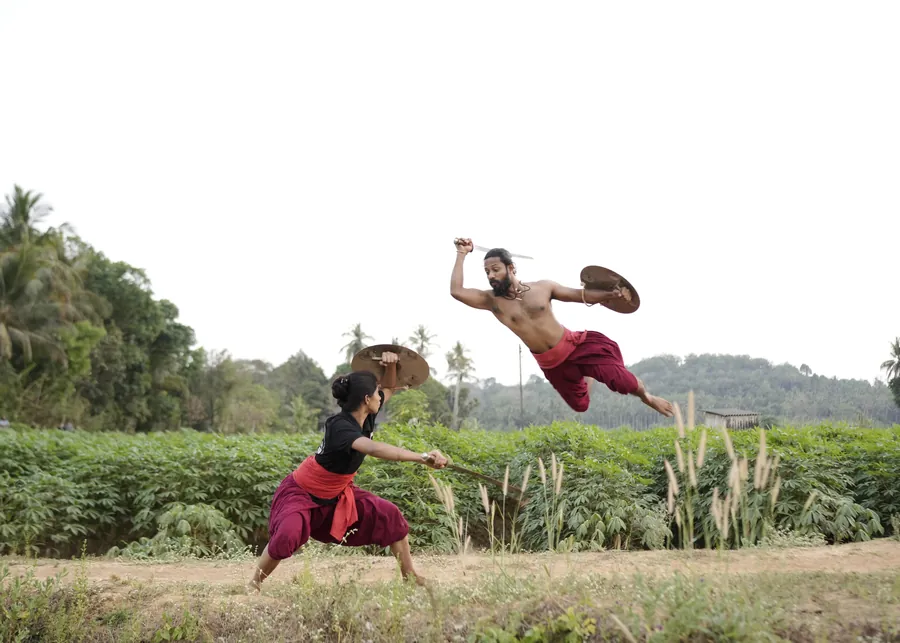
- Angathari: metal weapons, such as the sword and shield.
- Verumkai: bare-hand fighting.
The order itself is the safety system. Meithari makes the body strong, flexible and balanced before it ever has to control a weapon. A student who cannot hold a low stance steadily cannot safely swing a stick at speed. The teacher decides when each student is ready to move on. You can read about the 4 stages of Kalari in detail.
At Athma Kalari, the 2-week and 1-month programs are body training only. The 2-month program adds just an introduction to Cheruvadi, the short stick, under close watch.
The space helps too. A kuzhi kalari, the traditional pit kalari, has a floor of packed earth. It is softer than concrete and gives bare feet a good grip.
Common injuries and how they are avoided
Most Kalari injuries are minor. They usually happen in the first weeks, before the body is used to the work.
| Injury | Usual cause | How it is avoided |
|---|---|---|
| Pulled muscle at the back of the leg or groin | Forcing high kicks too early | Kick only as high as the body allows; height comes with weeks of practice |
| Sore knees | Deep stances with the knee falling inward | Correct alignment from the teacher; build depth slowly |
| Twisted ankle | Jumps and turns when tired, or on a slippery floor | Warm up first; train on a safe floor; rest when tired |
| Lower back strain | Bending and kicking without core control | The waist cloth gives support; Meithari builds core strength first |
| Bruises and knocks | Weapon practice with a partner | Weapons only after body training; slow speed first |
The warm-up
Every session at Athma Kalari starts with the Kalari warm-up. It raises body heat and loosens the joints step by step. Skipping the warm-up is one of the most common ways people get hurt in any training.
Oil and massage
Oil has always been part of Kalari. Students traditionally rub oil into the body before practice, and Uzhichil, the Kalari oil massage, is used alongside training to ease stiff muscles and support flexibility. Read more in our guide to Uzhichil, the Kalari massage.
Not forcing kicks
A Kalari kick should swing up freely from the hip. If you have to force it, the leg is not ready yet. Kicks get higher over weeks of daily practice, not in a single class.
Telling the teacher
Tell the teacher about any old injury before your first class, and about any pain during training. He can change an exercise or give you a lighter version. Pain is a signal to stop, not to push.
Is Kalaripayattu effective for self-defence?
Kalari is effective at building the qualities that self-defence needs. It is not a quick course in street fighting, and no honest teacher would promise that it is.
What the training really builds:
- Balance. Low stances and footwork make you hard to push over.
- Reflexes. Partner work trains you to react quickly to movement.
- Distance. Weapon training teaches you exactly how far an attack can reach.
- Awareness. You learn to watch the whole body of a partner, not just the hands.
- Fitness. Strength, speed and stamina help in any situation, including getting away.
Modern self-defence is mostly about avoiding danger: noticing a problem early, keeping your distance and leaving. Kalari helps here because it makes you calmer and more aware. Bare-hand fighting, Verumkai, comes at the end of the training, after years of practice. If you need practical self-defence skills within a few weeks, a short self-defence course is a better fit. If you want a deep martial art that trains body and mind over years, Kalari is a good choice.
Is Kalari good for health?
For most people, yes. Regular practice can help build strength, flexibility, balance and stamina. It works the whole body, uses your own body weight, and asks for steady breath and full attention. You can read about the mental health benefits of Kalaripayattu too.
Kalari also has its own healing tradition, Kalari Chikitsa. It grew alongside the martial art to care for the strains and injuries of training, using oil massage, marma therapy and bone setting. It is not a replacement for emergency or surgical medicine.
Who should talk to a doctor first
- Anyone with a recent fracture or recent surgery
- Anyone with severe or sudden pain, or numbness
- Anyone with a fever
- Anyone who is pregnant
- Anyone with a heart condition or high blood pressure
This does not always mean you cannot train. It means your doctor should agree first, and the teacher should know before your first class.
FAQs
Q: Is Kalaripayattu dangerous for beginners?
A: No, when it is taught in the traditional order with a teacher watching. Beginners start with body exercises, and weapons come much later.
Q: What are the most common Kalari injuries?
A: Pulled muscles from forcing kicks, sore knees from poor stances and twisted ankles. A full warm-up and patience prevent most of them.
Q: Is Kalari effective in a real fight?
A: It builds balance, reflexes, a sense of distance and awareness. But using any martial art under pressure takes years. The best self-defence is to avoid danger.
Q: Is Kalari good for health?
A: For most people, yes. It can help build strength, flexibility and balance. See a doctor first if you have a recent injury, a heart condition or are pregnant.
Q: Do beginners use weapons?
A: Not at Athma Kalari. The first month is body training only. The 2-month program adds an introduction to the short stick.
Train safely from day 1
At the gurukulam, Ashan Vipin Das watches every student and sets each person's pace. He has 29 years of Kalari practice. If you arrive with an injury, we also offer Kalari treatments after a consultation. When you are ready, look through our Kalaripayattu training programs.