The otta is a short, curved wooden stick used in Kalaripayattu. It is about the length of an arm and is usually made of tamarind wood. It is often described as S-shaped, with a rounded tip at one end.
Training with it is called Otta Payattu (also written Ottapayattu). It belongs to Kolthari, the stage of wooden weapons, and it is usually one of the last wooden weapons a student learns. Because its strikes aim at the vital points of the body, it is closely linked to marma.
This page explains what the otta is, why it matters, how it is practised, and when a student is ready for it.
What the otta looks like
The otta is a single piece of wood with a strong curve. Its main features are:
- Length: about the length of an arm, so it is shorter than the long staff.
- Shape: curved, often described as an S-shape. The curve gives a firm grip and lets the stick block and strike from different angles.
- Tip: one end is rounded into a small knob. This end is used for precise strikes.
- Wood: usually tamarind. Tamarind branches grow with a natural curve, and the wood is hard and heavy.
You may also see the names ottakol or otta kol. Kol means stick in Malayalam. Some say the name otta comes from a Malayalam word for a lone tusker elephant, but this is a traditional explanation, not a settled fact.
The otta in Kolthari
Kalaripayattu is taught in 4 stages: Meithari (body training), Kolthari (wooden weapons), Angathari (metal weapons) and Verumkai (bare hands). Our guide to the 4 stages of Kalari explains each one.
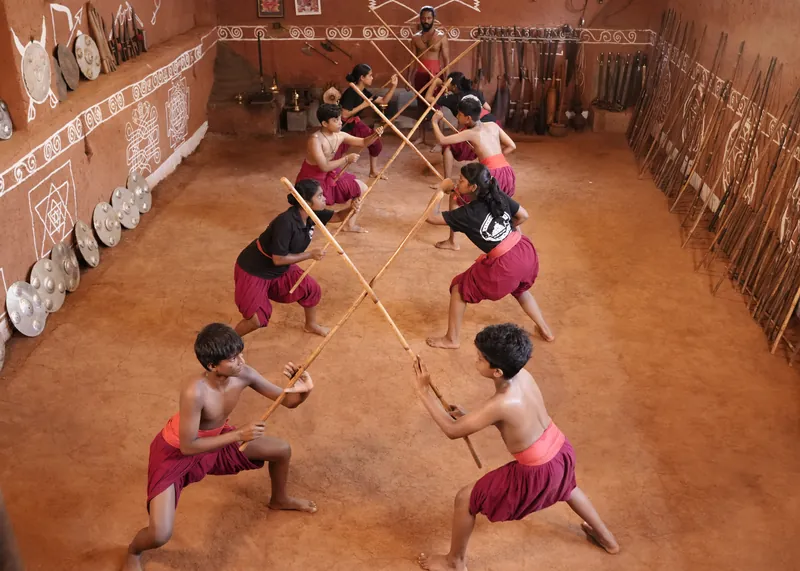
Kolthari usually begins with the long staff and the short stick. These teach distance, timing and how to move a weapon with the whole body. The otta comes later. It is often seen as the most advanced of the wooden weapons, and it needs all the body control built in the earlier stages.
| Wooden weapon | Malayalam name | What it teaches |
|---|---|---|
| Long staff | Kettukari | Reach, distance and power from the whole body |
| Short stick | Cheruvadi | Speed, close-range blocks and quick footwork |
| Curved stick | Otta | Precise strikes, low postures and marma knowledge |
For a full list of Kalari weapons, wooden and metal, see weapons in Kalaripayattu.
Why the otta is linked to marma
Marma are the vital points of the body. In Kalari, the same knowledge is used in 2 ways. A fighter learns where a strike does the most harm. A healer learns how to relieve pain at those same points.
The otta is closely tied to the fighting side. Its rounded tip and curve are made for short, exact strikes. In many traditions, Otta Payattu is where a student first learns in detail where the marma are and how to protect them. The aim in training is knowledge and control, not harm. Strikes stop short or land with care.
To understand marma better, read marma points in Kalari.
How Otta Payattu is practised
Solo sequences first
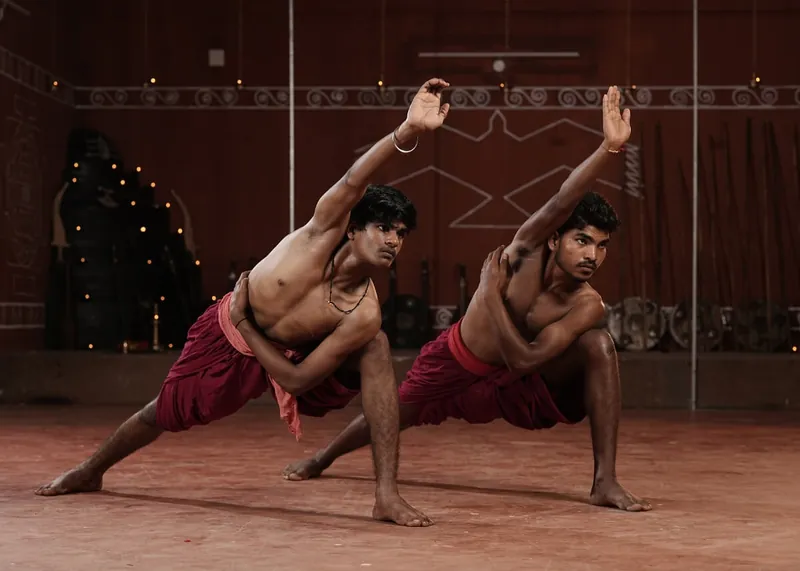
The student first learns otta sequences alone. Each one joins steps, turns, low postures and movements of the stick in a fixed order. The postures are the same Vadivu learned in Meithari, but now the stick must move with them. Many otta movements are very low and need strong legs and open hips.
Then with a partner
Once the solo sequences are clean, the teacher pairs students. One attacks and one defends, following a set sequence. Then they swap roles. The work starts slowly, with clear distance. Speed comes only when both partners are safe and controlled.
What the teacher watches for
- Correct distance between partners at every step.
- A low, steady body in each posture.
- Control of the tip, so strikes stop where they should.
- Calm, steady breath, even at speed.
Training order and safety
The otta is not a beginner's weapon. A student usually comes to it only after a long time of body training and work with the other sticks. The exact timing depends on the teacher and the student's progress, so there is no fixed number of months.
- Build a strong base in Meithari: kicks, steps, postures and sequences.
- Learn the long staff and short stick in Kolthari.
- Learn the otta solo sequences.
- Practise the otta with a partner, slowly at first.
- Only then move on to metal weapons in Angathari.
Some simple safety rules apply:
- Train only under a qualified teacher who can see and correct you.
- Never copy otta sequences from videos alone.
- Check the wood for cracks before each class.
- Never strike a partner's marma for real. The training is about control.
- Stop if you feel sharp pain in a joint, and tell your teacher.
If you are wondering how long the path takes, read how long it takes to learn Kalaripayattu.
FAQs
Q: What is the otta weapon?
A: It is a short, curved wooden stick used in Kalaripayattu. It is about the length of an arm and is usually made of tamarind wood.
Q: What is Otta Payattu?
A: It is the practice of sequences with the otta, first alone and then with a partner. It belongs to Kolthari, the wooden weapons stage.
Q: Is the otta the same as the cheruvadi?
A: No. The cheruvadi is a short, straight stick. The otta is curved and is usually learned later.
Q: Why is the otta linked to marma?
A: Its rounded tip is made for exact strikes, and otta training is where many traditions teach the vital points in detail.
Q: Can beginners learn the otta?
A: Not at first. Beginners start with body training. The otta comes after years of body and stick work.
Q: Can I learn the otta online?
A: No. Weapon work needs a teacher who can see and correct you in person.
Begin with the body
Every otta student started with kicks, steps and postures. At the gurukulam you begin with Meithari, and the 2-month Kalari Parisrema adds an introduction to the short stick. See the residential Kalari programs to plan your stay.