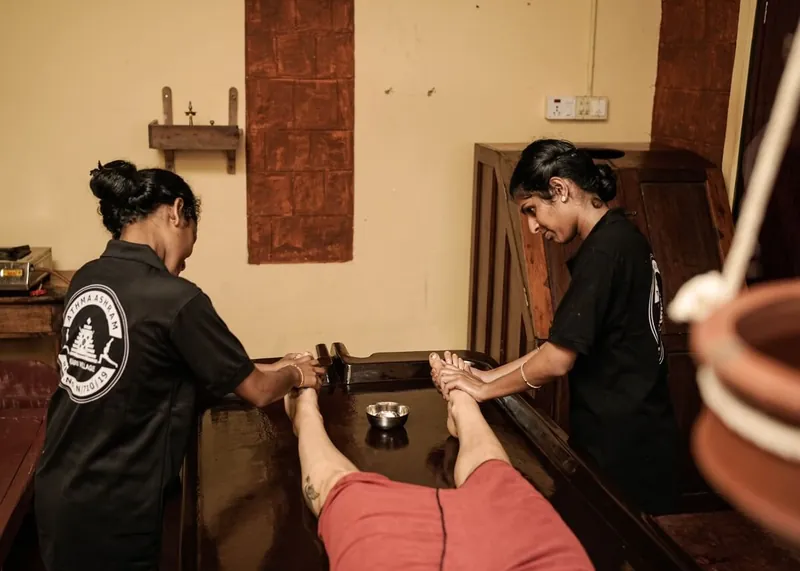
Marma points are vital points of the body. Each one is a place where flesh, vein, bone and joint meet. In Kalaripayattu, these points matter in 2 ways: a fighter learns where to strike, and a healer learns how to relieve pain.
You will see different numbers of marma points. Ayurveda texts commonly list 107. Kalari traditions often speak of 108. The tradition of Athma Kalari counts 64 as important in treatment. These are differences between traditions, not errors.
This guide explains what a marma is, why the counts differ, how they are grouped, and why marma work belongs only in trained hands.
What is a marma?
A marma is a meeting point. At each one, several kinds of tissue come together: flesh, vessels, bone and joint. Because so much meets in one small area, these points are sensitive.
An injury to a marma can cause more harm than an injury elsewhere. Careful, skilled pressure on the same point can help ease pain and stiffness. This double nature is at the heart of marma knowledge in Kalari.
107, 108 or 64: why the numbers differ
| Tradition | Number of marma | Note |
|---|---|---|
| Ayurveda texts | 107 | The count given in the classical Ayurveda texts |
| Many Kalari traditions | 108 | Often used in Kalari teaching and writing |
| Athma Kalari's tradition | 64 | The marma counted as important in treatment |
Why the difference? Each tradition grew from its own teachers and its own purpose. Some count every point. Some group nearby points together. Some focus on the points that matter most for fighting, and others on those that matter most for healing. The 64 in our tradition are the points Ashan Vipin Das's lineage treats as most important in practice.
So when you read "107 marma points" in one place and "108 marma" in another, both can be correct within their own tradition.
Marma points by body region
Ayurveda texts group the 107 marma by region of the body. The grouping is commonly given like this:
| Body region | Number of marma |
|---|---|
| Arms and legs (11 in each limb) | 44 |
| Chest and abdomen | 12 |
| Back | 14 |
| Head and neck | 37 |
The head and neck hold the most points. That is one reason the neck and head are guarded so carefully in Kalari postures and in treatment. Kalari traditions may group the points differently, but the main regions are the same.
The fighter's side: marma in Kalaripayattu
In Kalaripayattu, marma knowledge is part of the art of fighting. This is sometimes called marma kala. A student learns which points to protect, and later, which points a strike can reach.
This knowledge is given slowly, and only to senior students the teacher trusts. It is linked to advanced training, such as work with the curved stick. Read about the otta and its link to marma.
In practice, marma kala techniques are mostly about control:
- Postures that keep your own vital points covered.
- Footwork that keeps a safe distance.
- Strikes in partner sequences that stop short, with full control.
- Knowing how to help a partner if a point is hit by accident.
The aim is never to cause harm in training. A good teacher holds back this knowledge from anyone who is not ready.
The healer's side: marma in Kalari Chikitsa
Kalari teachers have traditionally also been healers, treating the injuries that come with training. This healing side of the tradition is called Kalari Chikitsa. Here marma knowledge is used to relieve pain, not cause it.
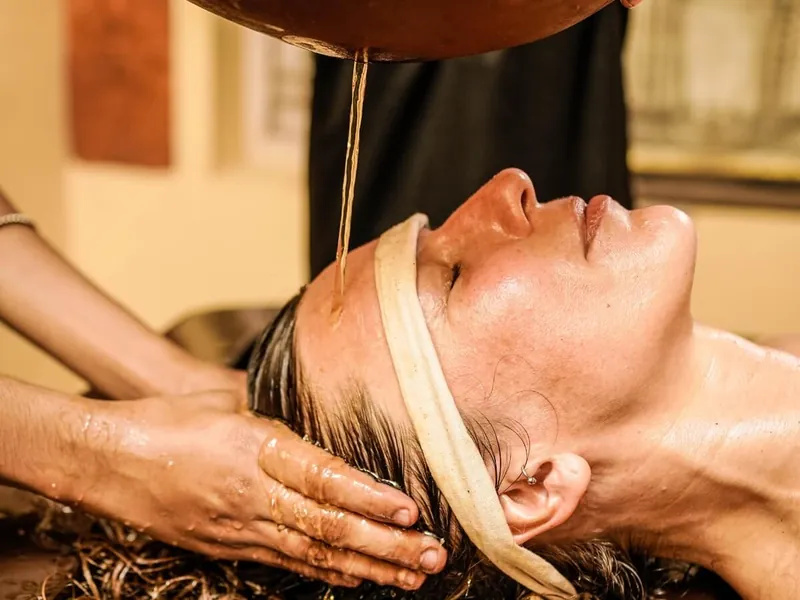
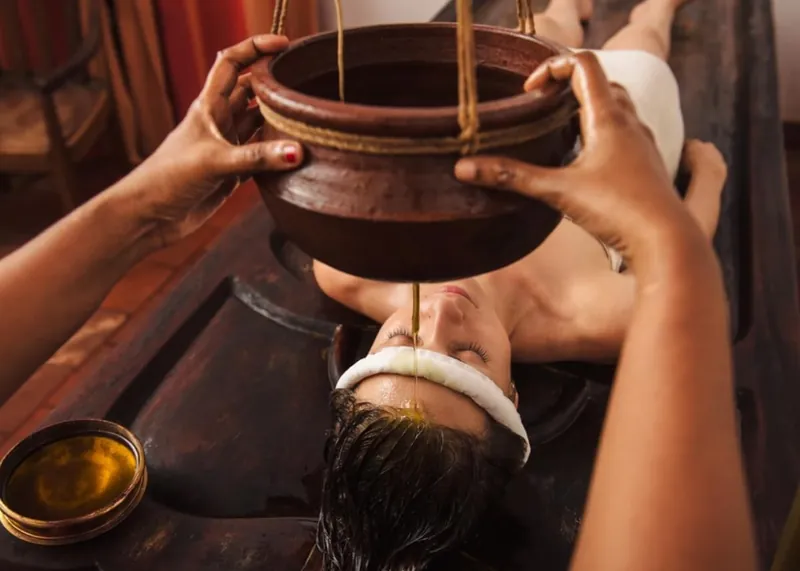
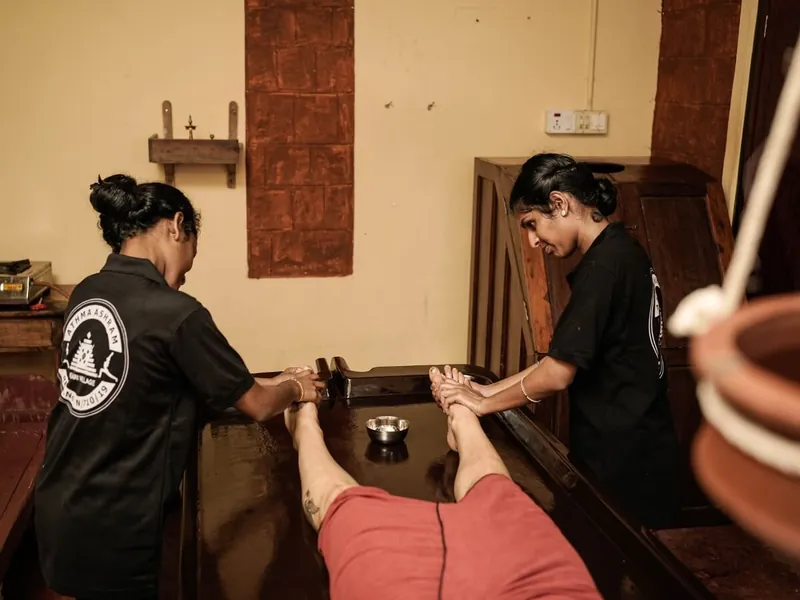
In Marma Chikitsa, the therapist works on the marma points with skilled, measured pressure. It is often given with Uzhichil, a medicated oil massage over the marma points. Read about Uzhichil, the Kalari massage.
Marma work can help ease:
- Back and disc problems, such as lower back pain and sciatica.
- Neck and cervical problems.
- Muscle and ligament strains.
- Joint pain and stiffness.
- Sports injuries and chronic pain.
At Athma Kalari, Ashan Vipin Das first examines each person: a consultation, your history and your pulse. Nothing is prescribed before this. Our article on Kalari marma treatment explains what a session involves.
Safety: marma work only from trained hands
Marma points are sensitive by nature. Pressure in the wrong place, or with the wrong force, can do harm. Please keep to these rules:
- Do not press marma points on yourself or others after watching a video.
- Have marma treatment only from a therapist trained in a real lineage.
- See a doctor first if you have a recent fracture, severe or sudden pain, numbness, fever, recent surgery, or if you are pregnant.
- Kalari Chikitsa is not a replacement for emergency or surgical medicine.
FAQs
Q: What are marma points?
A: They are vital points of the body where flesh, vein, bone and joint meet. They are sensitive to injury and can also be used in treatment.
Q: Are there 107 or 108 marma points?
A: Ayurveda texts commonly list 107. Many Kalari traditions speak of 108. Athma Kalari's tradition counts 64 as important in treatment.
Q: What is marma kala?
A: It is the knowledge of marma within the martial art: which points to protect and which a strike can reach. It is taught only to senior students.
Q: Is marma treatment painful?
A: Uzhichil, the oil massage often given with it, is firm but not painful. Tell your therapist if anything feels too strong.
Q: Do I need to be a Kalari student to have marma treatment?
A: No. Anyone can come for treatment. Female therapists treat women.
Q: Can I learn marma from a book or video?
A: No. Marma knowledge needs a teacher, years of training and close supervision.
Marma treatment at the gurukulam
If you live with pain, a consultation with Ashan Vipin Das is the place to start. He will examine you and suggest the right therapies, which may include Marma Chikitsa and Uzhichil. See the 12 Kalari therapies to learn more.