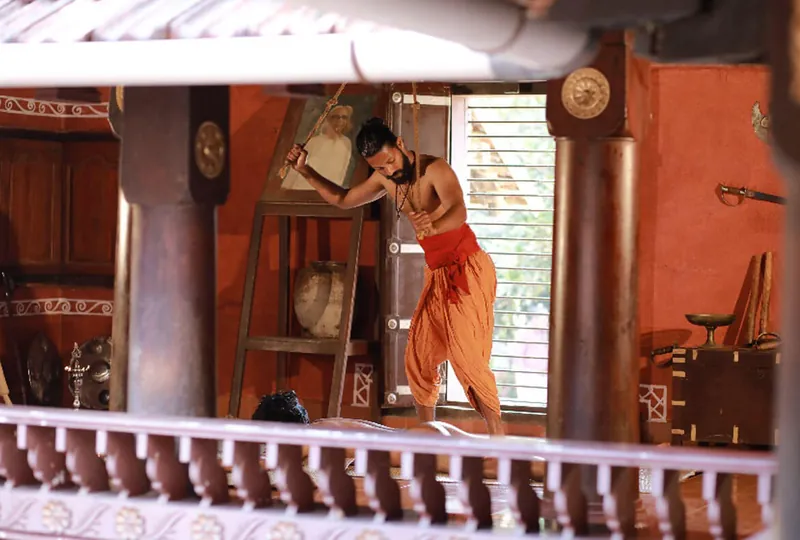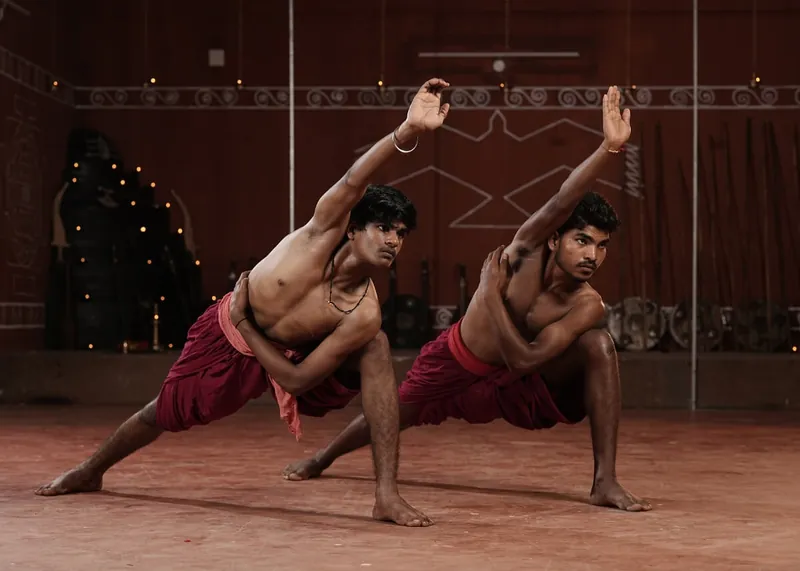
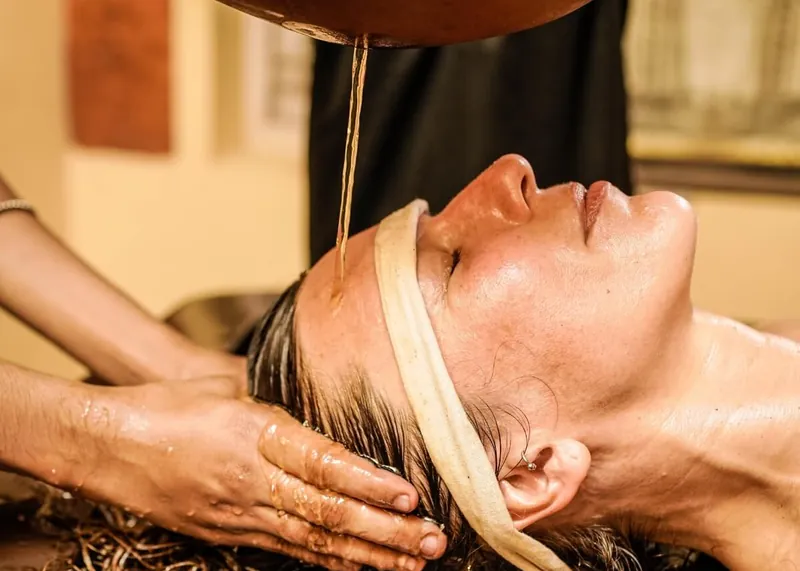
Kalari Chikitsa is the healing side of Kalaripayattu, the martial art of Kerala. It uses medicated oils, massage, marma (vital point) therapy, heated herbal bundles and bone setting to help the body recover from injury, pain and strain.
It grew inside the kalari itself. Students fall, twist joints and pull muscles in training, and tradition holds that teachers learned to treat these injuries in the same place they taught. Over many generations this became a full system of care. People also call it Kalari treatment, Kalari marma chikitsa or Kalari Ayurveda treatment. You may see it written as one word, kalarichikitsa.
This guide explains how it works, the 12 therapies, what people come for, how long a course takes, and when to see a doctor first.
Where Kalari Chikitsa comes from
Kalaripayattu trains the whole body: kicks, jumps, deep stances and weapons. A teacher of this art must also know how the body is built and how it gets hurt. In the Kalari tradition, the teacher is both trainer and healer.
At the centre of this knowledge are the marma points. These are places where muscle, bone, joints, blood vessels and nerves meet. In combat, they are points to protect. In healing, they are points to treat with care. The tradition counts 64 marma as important in treatment.
Kalari Chikitsa shares many oils and herbs with Ayurveda, the traditional medicine of Kerala and India. Its own strength is the body in movement: muscles, bones, joints and injuries. That focus comes from treating Kalari students.
How it differs from a spa massage
- It starts with an examination. A spa offers a menu. Kalari Chikitsa begins with a consultation, and the treatment is chosen for your body.
- It works with the marma points. The strokes follow the muscles and pass over the marma points with set pressure.
- It is aimed at a problem. A spa massage is mostly for relaxation. Kalari Chikitsa is used for back pain, stiff necks, sprains and old injuries.
- It runs as a course. Most plans are daily treatment over several days, not a single hour.
- It is firm. The pressure is deeper than most spa massages, but it should not be painful.
Consultation first
At Athma Kalari, every treatment starts with Ashan Vipin Das. He has 29 years of Kalari practice and is the 8th generation of his Kalari family. He asks about your history, examines the problem area and reads your pulse. Only then does he prescribe. Nothing is prescribed before this.
Bring any scans, X-ray reports or doctor's notes you have. They help him see the full picture.
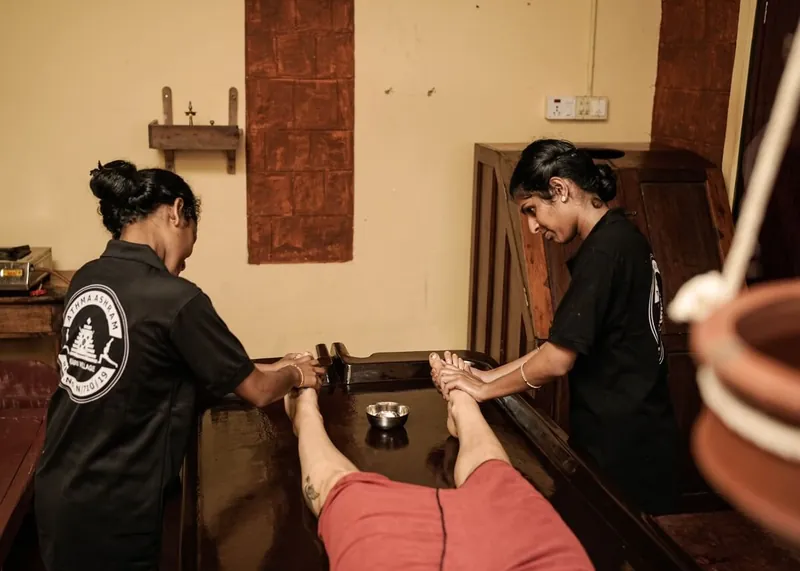
You do not need to be a Kalari student to be treated. Female therapists treat women.
The 12 Kalari therapies
Most plans combine 2 or more of these. Uzhichil is usually prescribed first.
| Therapy | What it is | Used for |
|---|---|---|
| Uzhichil | Medicated oil massage with the palms or feet, over the marma points | Fatigue, body pain, athletes, Kalari practitioners |
| Marma Chikitsa | Vital point therapy on the marma points | Injury, nerve damage, chronic pain, care after an accident |
| Kizhi | Heated herbal bundles. Ela Kizhi uses leaves, Podi Kizhi powders, Njavara Kizhi rice cooked in milk and herbs | Arthritis, inflammation, joint pain, muscle problems |
| Chavitti Uzhichil | Foot pressure massage; the therapist holds an overhead rope | Muscle and bone problems, low energy, exhaustion |
| Kettu Chikitsa | Bone setting and bandaging with cloth soaked in oil such as Murivenna, changed daily | Sprains, fractures, ligament tears, unstable joints |
| Dhara | A steady stream of warm oil or decoction. Shirodhara is on the forehead; Kashayadhara uses a decoction | Poor sleep, anxiety, migraine, nervous system problems |
| Vasti | A ring of dough holding warm oil for 30 minutes. Kati Vasti for the lower back, Greeva Vasti for the neck, Urovasti for the chest | Lower back pain, neck stiffness, chest congestion |
| Pizhichil | Warm oil squeezed from cloths during the massage | Stress, joint stiffness, rejuvenation |
| Nasya | Medicated oil through the nose | Sinus trouble, headache |
| Nadi Swedanam | Local steam on one area | Stiffness, swelling after a sprain, tired muscles |
| Traction | Manual spinal alignment, prescribed sparingly | Disc compression, poor spinal alignment |
| Shiro Abhyangam | Head and neck massage | Headache, mental tiredness, poor sleep |
What people come for
People come to the gurukulam for Kalari Chikitsa with problems like these:
- Back and disc problems: lower back pain, sciatica, lumbar spondylosis and disc problems. See our page on Kalari treatment for back pain.
- Neck and cervical problems: stiffness and pain in the neck and upper back. See Kalari treatment for neck pain.
- Joints and bones: dislocations, sprains, fractures, instability and arthritis. See Kalari treatment for joint pain.
- Sports injuries: old and new strains from running, gym work, dance and other sports. See Kalari treatment for sports injuries.
- Muscles and ligaments: tears and strains.
- Nerves and long-term pain: nerve damage, recovery after accidents, and chronic pain.
Kalari Chikitsa can help ease pain and stiffness and support recovery. It cannot fix every problem, and it is not a replacement for emergency or surgical medicine.
How long a course runs
- A tired body might need 3 days.
- A disc problem or an old sports injury usually needs 7 to 21 days of daily treatment.
- A session in the training packages is 75 minutes.
Oil therapies build up over several days, so 1 session is rarely enough. Ashan Vipin Das tells you the length of your course after the consultation.
If you are tired but have no particular injury, the rejuvenation packages of 3, 7 or 10 days start from ₹6,900. Rooms are booked separately. If you are training at the gurukulam, 3-, 5- and 7-day treatment packages fit around your classes. For a specific condition, the cost depends on the plan, so message us for a price.
What it feels like
Uzhichil and Kizhi are firm, not painful. Most of the time you lie still while the therapist works. Bone setting and traction can be uncomfortable for a moment.
The oil soaks into your skin and hair. Wear old, loose clothes on treatment days, because medicated oil does not wash out easily. Rest after a session and keep warm.
Safety: who should see a doctor first
Kalari Chikitsa is not right for every body at every time. See a doctor before booking if you have any of these:
- a recent fracture
- severe or sudden pain
- numbness in an arm, leg, hand or foot
- fever
- pregnancy
- recent surgery
Tell Ashan Vipin Das about any heart condition, high blood pressure, diabetes, skin problem or medicine you take. Oil and heat are not used on open wounds or infected skin.
If you have a fresh injury with heavy swelling, a joint that looks out of shape, or you cannot put weight on a limb, go to a hospital first. Kalari Chikitsa can help with recovery later, once a doctor has checked you.
FAQs
Q: What is Kalari Chikitsa?
A: It is the traditional healing system of Kalaripayattu. It uses medicated oils, massage, marma therapy, herbal bundles and bone setting to help with injuries, pain and stiffness.
Q: Is Kalari marma chikitsa the same as Kalari Chikitsa?
A: Marma Chikitsa is one part of it, and works on the vital points. Kalari Chikitsa is the wider system. Most plans include some marma work.
Q: Do I need to be a Kalari student to get treatment?
A: No. Anyone can be treated after a consultation. Students often add a treatment package to their training.
Q: How many days of treatment do I need?
A: A tired body might need 3 days. A disc problem or an old sports injury usually needs 7 to 21 days of daily treatment.
Q: Is Kalari treatment painful?
A: Uzhichil and Kizhi are firm, not painful. Bone setting and traction can be uncomfortable for a moment.
Q: Can women be treated?
A: Yes. Female therapists treat women.
Getting treated at Athma Kalari
Start with what is troubling you. Read about each therapy and how the consultation works on our Kalari therapies page. If you want a price for your condition, message us with a short note and any reports you have.