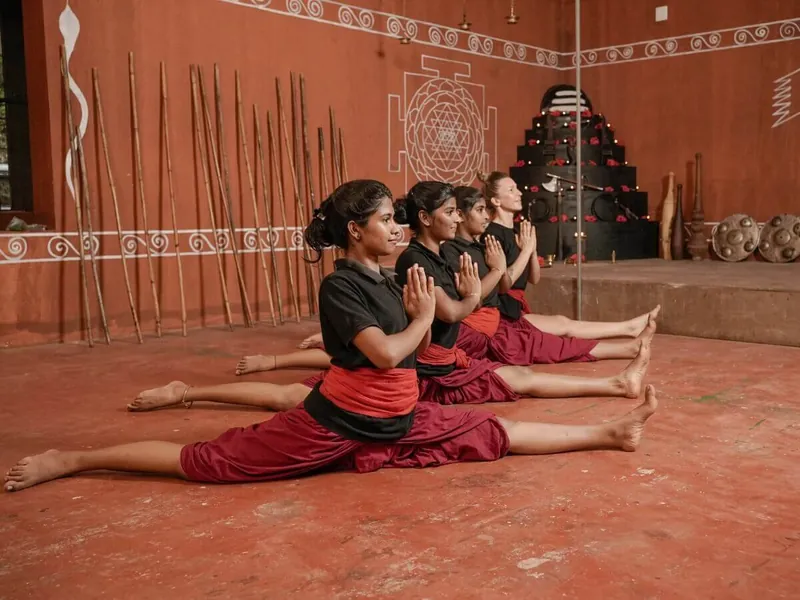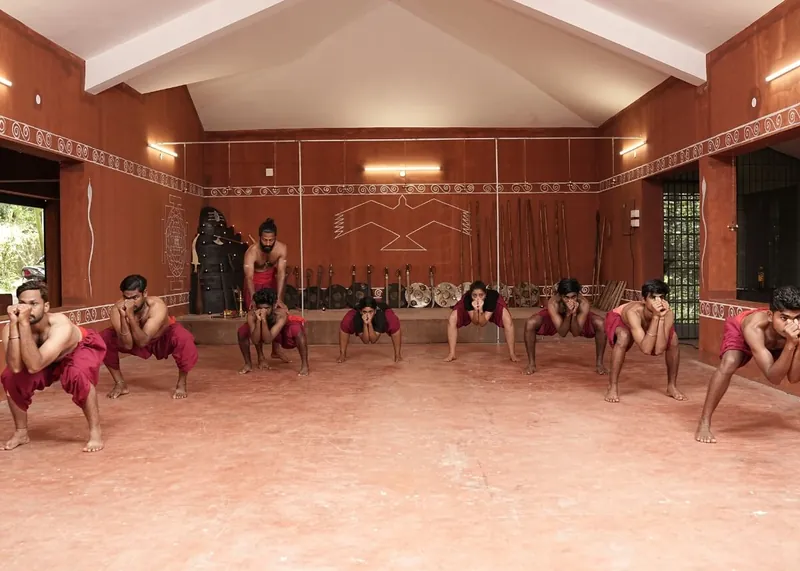
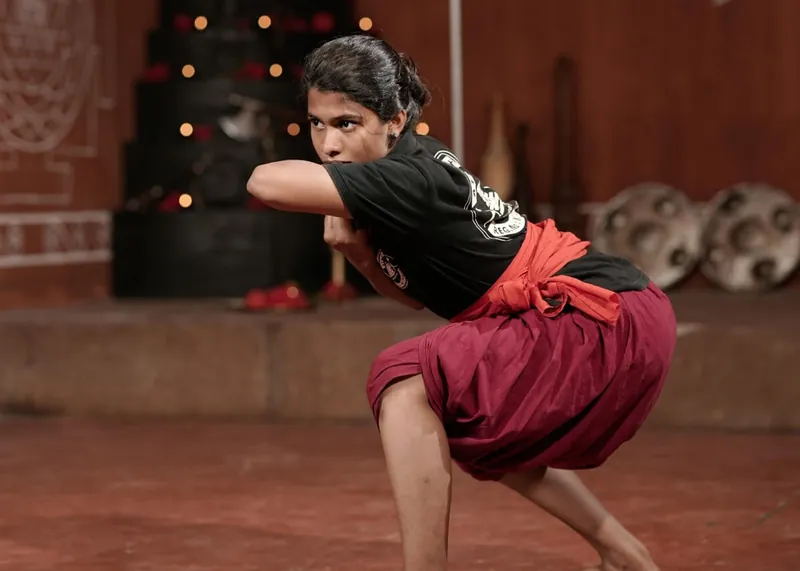
The traditional Kalaripayattu dress is the kacha, also called the uduthuketti. It is a long cloth wrapped around the waist and knotted, so the legs can move freely. Tying it is called kachakettal.
Men usually train in the kacha with a bare chest. Women and children usually wear the kacha with a fitted top. If you are new, loose clothes are fine for your first classes.
This guide explains the Kalari costume, why it is worn, how it is tied, and how to choose a size.
What is the kacha?
The kacha is the Kalari uniform. It is a long piece of cotton cloth. It is wrapped firmly around the waist and hips and tied with a knot, so it stays in place through kicks, jumps and low postures.
You will hear many names for it: kacha, uduthuketti, Kalari dress, Kalari costume, Kalari pants or Kalari dhoti. They all point to the same idea, a cloth tied for training. Note that it is not the same as a mundu or dhoti worn every day in Kerala. A mundu hangs loose. The kacha is tied close to the body so it never gets in the way.
Why the kacha is worn
- Free legs. Kalari has high kicks, wide steps and deep postures. The kacha lets the legs move in every direction.
- Support at the waist. The firm wrap supports the waist and lower back during hard training.
- Nothing loose. There is no extra fabric to catch a foot or a weapon.
- Cool and simple. Cotton breathes in Kerala's heat, and it is easy to wash and dry.
- Tradition. Students have trained in it for generations. Putting it on is part of getting ready to enter the kalari.
Kalari dress for men
Men traditionally wear only the kacha and train bare-chested. There are simple reasons for this. The teacher can see the spine, shoulders and hips and correct the posture. The body stays cool in the heat. In the Kalari tradition, oil is also used on the body, and bare skin suits this. It is a practical custom, not a show.
Kalari dress for ladies
Women have a long place in Kalari. Unniyarcha, one of the best-known heroes of the northern ballads, was a woman warrior. Today women usually wear the kacha over fitted leggings or tights, with a fitted T-shirt or sports top. Long hair is tied back firmly. The aim is the same as for men: free legs, nothing loose, and a posture the teacher can see. Read more in Kalaripayattu for women.
Kalari dress for kids
Children wear a smaller kacha with a T-shirt, or simple shorts and a T-shirt when they are starting out. The cloth should be firm but never tight around the stomach. At Athma Kalari the minimum age is 7. See Kalaripayattu for children and adults for more.
How to tie the kacha
The way the kacha is tied differs from kalari to kalari. Your teacher or a senior student will show you on your first day. These general steps will help you understand it:
- Stand straight. Hold one end of the cloth at your waist.
- Wrap the cloth around your waist. Keep it flat, with no twists.
- Bring the cloth around and through in the way your teacher shows, so the hips are covered and the legs stay free.
- Pull each turn firm. It should hold your waist well without stopping your breath.
- Tuck in the end and tie the knot at the waist.
- Test it. Drop into a low posture and do a kick. Nothing should slip or pull.
It takes a few tries to get it right. Ask your teacher to check it in the first week.
Size guide for the Kalari Uduthuketti
Athma Kalari sells a Kalari Uduthuketti for ₹1,250. It comes in 3 sizes:
| Size | Waist | Length |
|---|---|---|
| Small | 27 inch | Knee length |
| Medium | 31 inch | Calf length |
| Large | 33.5 inch | Ankle length |
If you are between sizes, take the larger one. If you are coming to the gurukulam, you can also buy one when you arrive. Kalari clothing is not part of the program price.
What to wear if you are new
You do not need a kacha on your first day. Loose, comfortable clothes are fine at first.
- Track pants or loose cotton trousers that let you kick and squat.
- A T-shirt that is not too loose.
- No zips, buttons, belts or jewellery.
- Bare feet. Kalari is practised without shoes.
For a residential stay, bring 3–4 sets of loose practice clothes, as you train twice a day. Our page on rooms, food and what to bring has the full packing list. For an online class at home, loose clothes are all you need.
Caring for your kacha
Wash it after each class, as it holds sweat and oil. Dry it in the sun if you can.
FAQs
Q: What is the Kalaripayattu dress called?
A: It is called the kacha, also known as the uduthuketti. Tying it is called kachakettal.
Q: Do I need a kacha for my first class?
A: No. Loose, comfortable clothes are fine at first. You can buy a kacha later or on arrival.
Q: What do women wear for Kalari?
A: Usually the kacha over fitted leggings, with a fitted T-shirt or sports top, and long hair tied back.
Q: Is the Kalari dress the same as a dhoti?
A: No. A dhoti or mundu hangs loose. The kacha is tied close to the body so the legs move freely.
Q: Which size should I buy?
A: Small fits a 27 inch waist, Medium 31 inch and Large 33.5 inch. Between sizes, take the larger.
Get your Kalari dress
The Kalari Uduthuketti is the same cloth our students train in at the gurukulam. You can order it now, or pick one up when you arrive. You can also browse the Athma Kalari shop for herbal oils and our T-shirt.