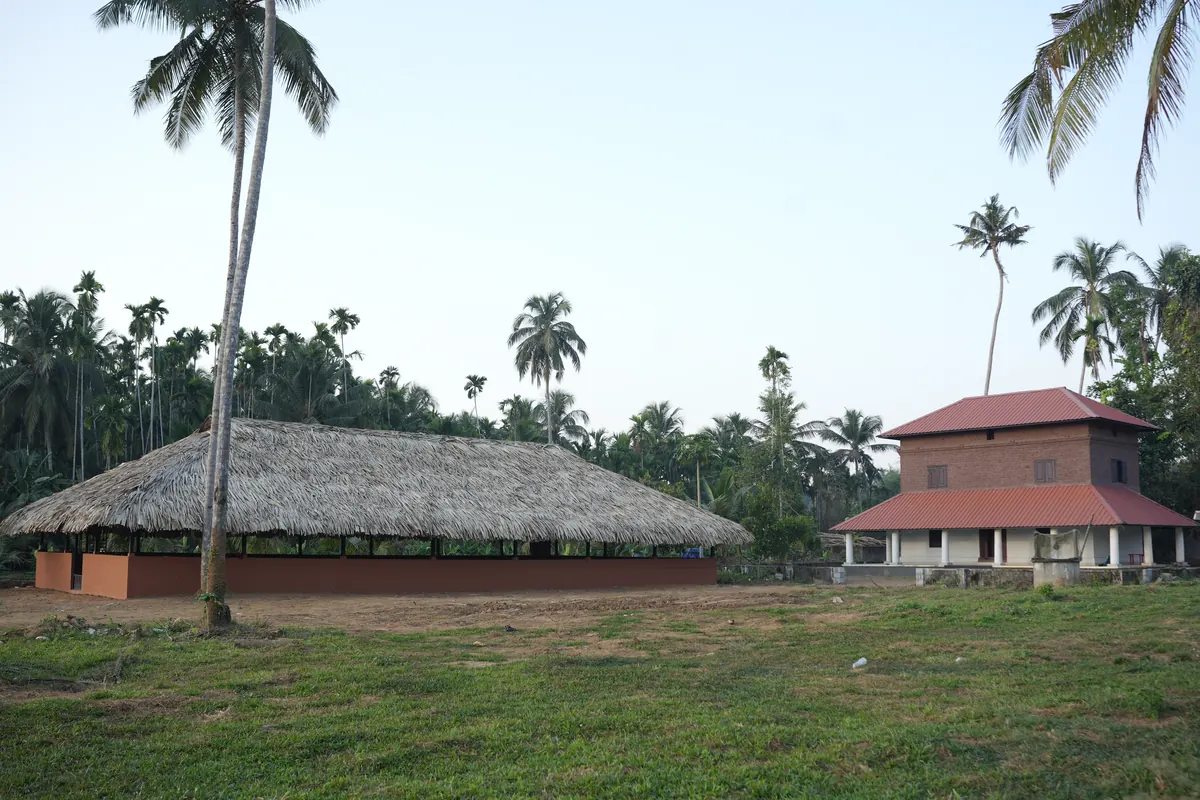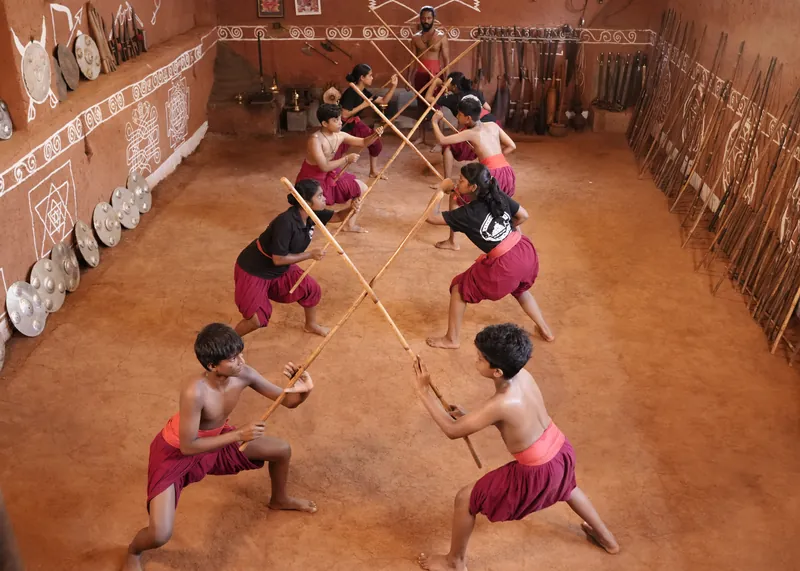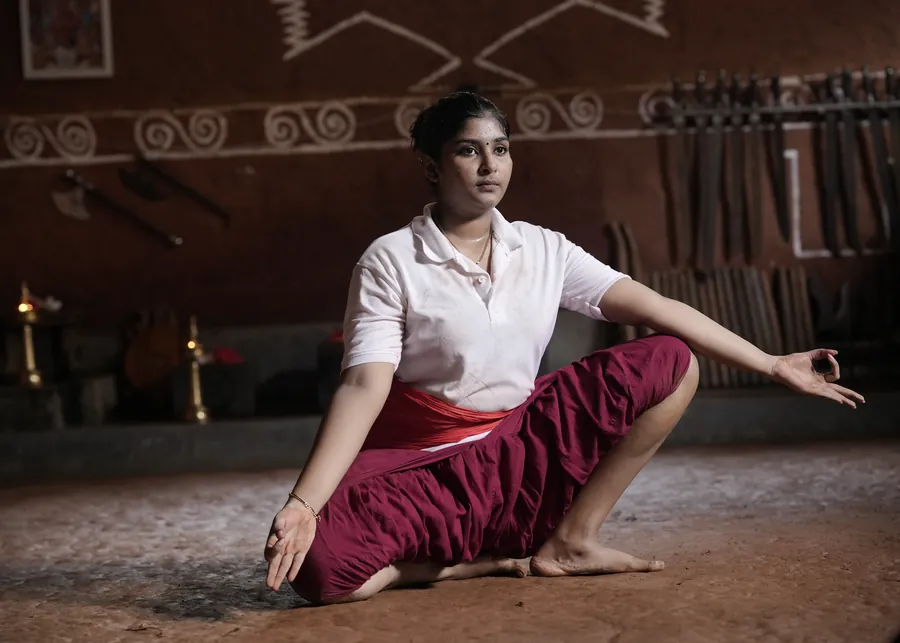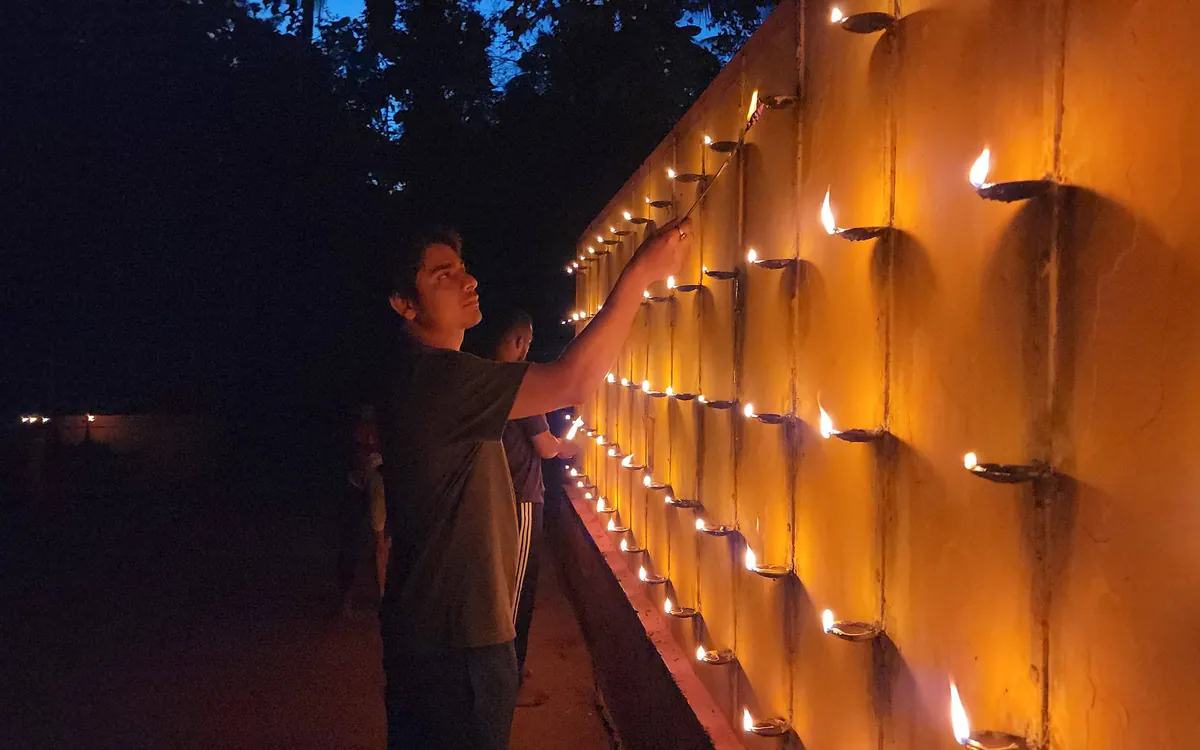
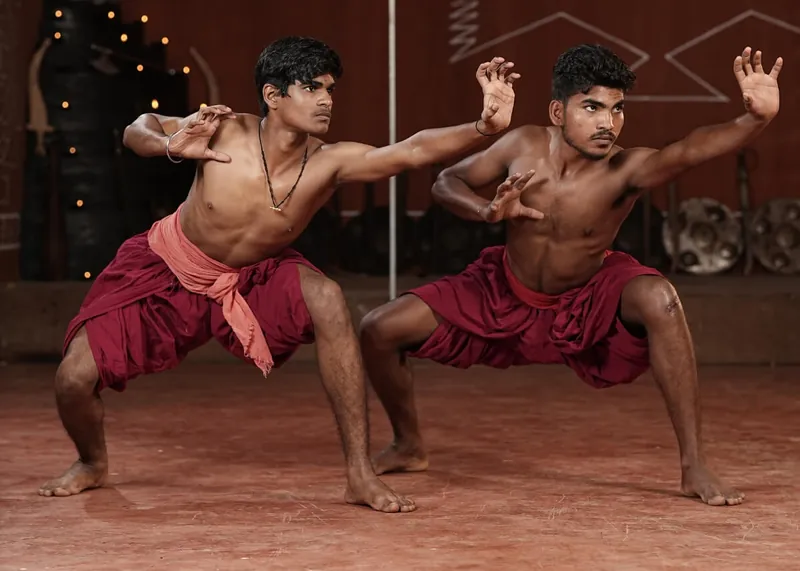
In 10 days at Athma Kalari, you learn the base of Kalaripayattu: the salutation, the animal postures, the kicks, the footwork, the first body sequences and the long stick. You train 3 times a day in a traditional kuzhi kalari, and you live at the gurukulam for the whole course.
The 10-Day Program is our newest course. It runs on fixed batch dates, about 2 a month. Prices start at ₹16,000 per person, including training, stay and 3 meals a day.
This guide covers who the course suits, the daily schedule, what each part of the curriculum means, and what you can realistically learn in 10 days.
Who the 10-day course suits
- People with limited leave. If you cannot take a month off, 10 days still gives you a real start.
- Complete beginners. No experience is needed. The course starts from the salutation on day 1.
- People who want to try before a longer stay. 10 days shows you how your body and the routine feel before you commit to 1 or 2 months.
- Travellers in Kerala who want to train seriously for part of their trip.
- Students of the online workshop who want to train in person with the teacher.
The minimum age for training is 7. If you have a recent injury or a health condition, tell us before you book.
The daily schedule
The day has 3 Kalari sessions, with mantra practice, meals and an hour of seva in between.
| Time | What happens |
|---|---|
| 5:30 to 7:30 AM | Kalari session 1 |
| 8:30 to 9:30 AM | Mantra sadhana |
| 9:30 to 10:30 AM | Breakfast |
| 11:00 AM to 12:00 PM | Kalari session 2 |
| 1:00 to 2:00 PM | Lunch |
| 3:30 to 4:30 PM | Seva on the organic farm |
| 5:30 to 7:30 PM | Kalari session 3 |
| 8:30 to 9:30 PM | Dinner |
The morning and evening sessions are 2 hours each. The late-morning session is 1 hour. The gaps between them matter. Rest after lunch, so your body is ready for the evening.
The 6 parts of the curriculum
The teacher is Ashan Vipin Das, the 8th generation of his Kalari family, with 29 years of practice. He teaches the northern (Vadakkan) style. Over the 10 days, the course covers 6 parts.
1. Vandanam: the salutation
Every session starts with Vandanam, a salutation to the kalari, the teacher and the art. You learn the movements on day 1 and repeat them at the start of every session. By the end of the course, you can do it on your own. Read more about Kalari Vandanam.
2. Vadivukal: the animal postures
Vadivukal are the postures of Kalaripayattu. Many are named after animals, such as the elephant, the lion, the horse and the snake. They teach you to hold the body low, stable and ready to move.
3. Kaalukal: leg swings and kicks
Kaalukal are the leg swings and kicks, done in lines across the floor. They open the hips and build strength in the legs. In 10 days, your kicks get straighter and more controlled.
4. Chuvadukal: footwork
Chuvadukal are the steps: set ways of moving the feet. Footwork links the postures and kicks into movement.
5. Meypayattu: body sequences
Meypayattu are set sequences that join postures, steps, kicks, turns and jumps into one flow. You learn the first sequence part by part, then practise it as a whole. See Meypayattu.
6. Vadiveeshal: the long stick
Vadiveeshal is training with the long stick. You learn how to hold it, how to swing it and how to move your feet with it. It is a first taste of Kolthari, the stick stage of Kalari.
Mantra sadhana and seva
2 parts of the day take place outside the kalari.
Mantra sadhana is an hour of mantra practice each morning, between the first session and breakfast. It gives the body a rest after the first session and steadies the mind for the day.
Seva means service. For 1 hour each afternoon, you help on the organic farm at the gurukulam. Seva is part of life in a gurukulam.
What you can learn in 10 days, and what takes longer
10 days is enough to learn the base and to feel how Kalari works on the body. It is not enough to master it. Be clear about this before you come.
| After 10 days | After 1 to 2 months |
|---|---|
| You can do the Vandanam on your own. | The Vandanam is smooth and steady. |
| You know the main postures and kicks. | Postures are lower and kicks are higher and cleaner. |
| You know the first body sequence. | You learn more sequences and do them with speed and balance. |
| You have held the long stick. | Your stick work becomes more confident. |
| You have a routine you can practise at home. | You have a strong base for the next stage. |
If you can give more time, Ashan Vipin Das recommends 2 months. Our residential programs are 1 month (Kalari Parijaya, ₹25,500) and 2 months (Kalari Parisrema, ₹51,000), with training, a dormitory stay and 3 meals. You start them the day you arrive. Teacher training needs 1 month here first.
How it feels
The first days are usually the hardest. 3 sessions a day is a lot for a body that is new to low postures and kicks. Expect sore thighs, hips and calves. Sleep early and eat well.
By the middle of the course, the routine settles. You know the order of the session, and you can start to work on the details.
If you want help with recovery, you can add Kalari massage during your stay.
Prices by room
All prices are per person and include training, stay and 3 meals a day.
| Room | Price for 10 days |
|---|---|
| Dormitory | ₹16,000 |
| Single Hut or Women's Private Room | ₹20,000 |
| Single Room | ₹27,000 |
| Deluxe Single (air-conditioned) | ₹37,000 |
How batches work and how to book
The 10-Day Program runs on fixed dates, about 2 batches a month. Everyone in a batch starts and finishes together. Batch dates for the end of 2026:
- 19 to 28 November 2026
- 3 to 12 December 2026
- 14 to 23 December 2026
- 25 December 2026 to 3 January 2027
Later dates are on the program page. Choose a batch and a room on the 10-Day Program page. If you have to leave early, we do not give refunds; unused money becomes credit for a future visit.
The nearest airport is Calicut (CCJ), about 46 km away. Our regular drivers charge fixed fares. See how to reach the gurukulam.
What to bring
- 3 to 4 sets of loose practice clothes.
- The kacha (uduthuketti), or buy one when you arrive. See the Kalari dress.
- A blanket and towels.
- Knee or ankle support, if you use it.
- Clothes you do not mind getting dirty, for seva on the farm.
- Your documents for check-in: Aadhaar and a passport-size photo for Indian guests; passport and visa or OCI card for overseas guests.
FAQs
Q: Can a complete beginner join the 10-Day Program?
A: Yes. No experience is needed. The course starts from the salutation on day 1.
Q: How many hours a day do I train?
A: There are 3 Kalari sessions a day: 2 hours in the morning, 1 hour in the late morning and 2 hours in the evening.
Q: How much does the 10-Day Program cost?
A: ₹16,000 in the dormitory, ₹20,000 in a Single Hut or Women's Private Room, ₹27,000 in a Single Room and ₹37,000 in a Deluxe Single. Prices are per person and include training, stay and 3 meals.
Q: Can I start on any day?
A: No. The 10-Day Program runs on fixed batch dates, about 2 a month. The 1-month and 2-month programs start the day you arrive.
Q: What is seva?
A: Seva means service. You spend 1 hour each afternoon helping on the organic farm at the gurukulam.
Q: Is 10 days enough to learn Kalaripayattu?
A: It is enough to learn the base and take home a routine to practise. To go further, Ashan Vipin Das recommends 2 months.