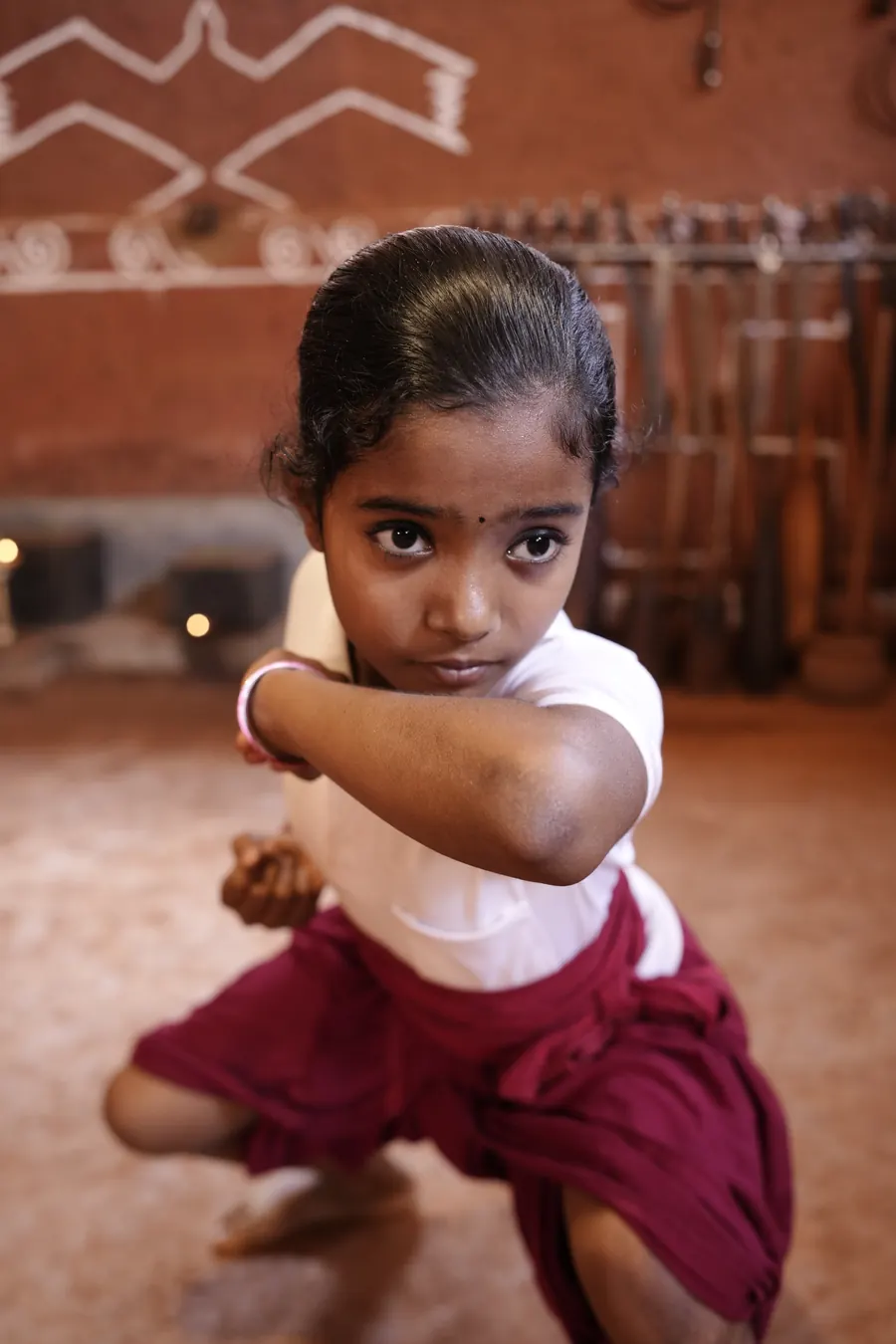
You can start Kalaripayattu at any age from 7. There is no upper age limit: if you are willing to learn and your body can move safely, you can begin at 12, 30 or 60.
At Athma Kalari, 7 is our minimum age. It is also the age at which children in Kalari families have traditionally begun. What changes with age is not whether you can learn, but how you train: how fast flexibility comes, how much rest you need, and how closely you follow the teacher's pace.
This guide looks at each stage of life, what parents should know about classes for children, and how to start well as an adult.
Why 7 is the usual starting age
Tradition holds that a child of about 7 is ready to begin. By this age, most children can listen, copy a movement and stand still when asked. These are the first things a Kalari student needs.
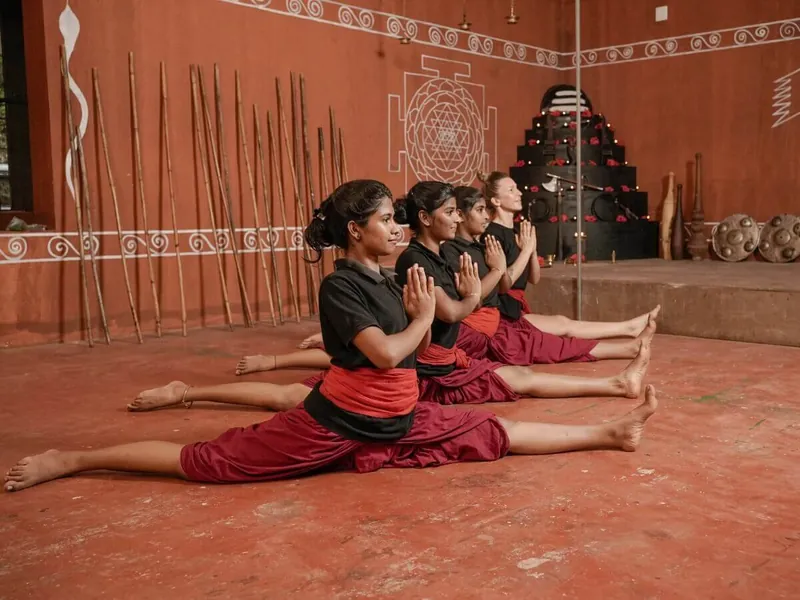
Young children are naturally flexible, and the early training uses that. Kicks, low stances and the animal postures (vadivu) come easily to a child's body. What a child must learn is control: to move with care, to respect the kalari and to wait for the teacher.
Below 7, most children find the discipline too hard. Free play, running and climbing build a better base at that age.
Kalaripayattu for children: what parents should know
Many parents search for Kalaripayattu near me for kids, or Kalari classes near me for kids. Wherever you look, these points matter more than the distance from your home.
- A teacher who watches every child. Small groups are better. A child should never practise kicks or jumps with nobody watching.
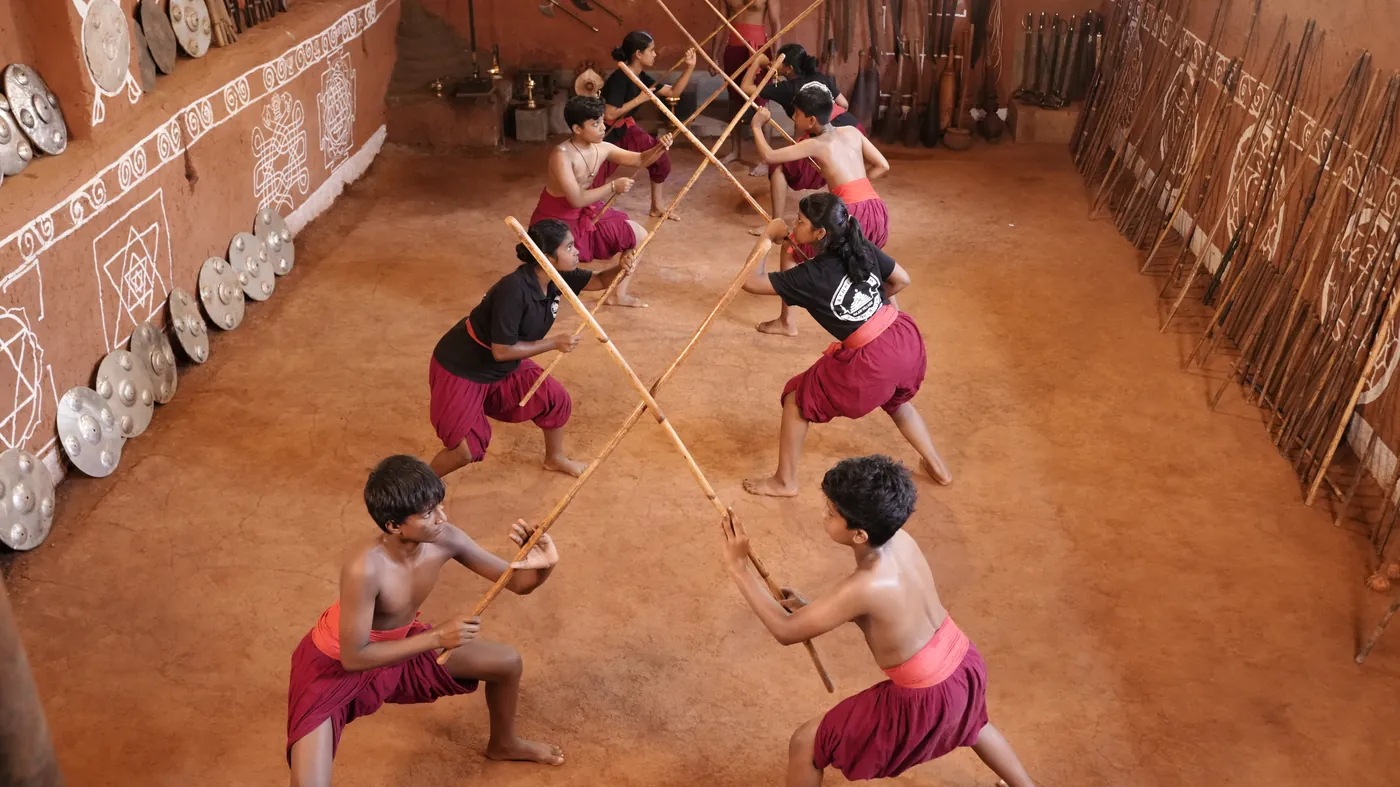
- Body training first. Children should spend their early years on Meithari, the body exercises. Weapons come much later. Our guide to the 4 stages of Kalari explains this order.
- A proper warm-up. Every class should start slowly and build up.
- A safe floor. A traditional kalari has a floor of packed earth. In a hall or at home, the floor must not be slippery.
- Respect and routine. Kalari starts and ends with a salute, the Kalari Vandanam. Children learn to respect the space, the teacher and the tradition.
Our guide on how to choose a Kalaripayattu school lists more questions to ask before you sign up.
What children gain
Regular training helps children become more aware of their body. They build balance, coordination and focus. They learn to follow instructions and to be patient. Kalari is not a competition sport, so there is no pressure to win. Each child moves at their own pace.
Bringing a child to the gurukulam
Children aged 7 and over can train at the gurukulam. Training starts at 5:30 AM and 5:30 PM, and each session lasts 2 to 2½ hours. That is a long day for a young child, so please talk to us before you book. We will help you decide whether a residential stay is right and how to plan it.
Teenagers
The teenage years are a very good time to learn. Strength grows quickly, and the body is still flexible. Most teenagers can follow the full daily training.
The risk at this age is doing too much too soon. Teenagers love high kicks and jumps, and they want weapons early. A good teacher holds them back until the body is ready. Growing bodies also need enough sleep and good food. Training twice a day works best with early nights.
Can I learn Kalaripayattu at the age of 30?
Yes. 30 is not late at all. Many people begin Kalari in their 30s. Your joints and muscles are still strong. You may be less flexible than a teenager, but flexibility returns with daily practice.
Adults often learn faster in one way: they understand why a movement is done. They can take a correction and apply it the same day. What adults must accept is that a high kick may take weeks or months, not days.
Starting at 40, 50 and later
You can start Kalaripayattu at 40, 50, 60 or later. There is no maximum age at Athma Kalari. The only conditions are that you are willing to learn and physically able to train.
What changes as you get older:
- Flexibility comes slowly. Low stances and kicks open up over weeks. Do not force them.
- Recovery takes longer. You may feel stiff the next morning. That is normal in the first 1 to 2 weeks.
- Old injuries matter. Tell the teacher about any knee, back, shoulder or neck problem before your first class.
- Pace is personal. The teacher may give you a lighter version of an exercise. This is not a lower standard. It is the right path for your body.
The slow, careful work of the body exercises builds balance and strength at any age. Uzhichil, the Kalari oil massage, has long been used alongside training to ease stiff muscles. You can read more about Uzhichil before training.
When to see a doctor first
Speak to your doctor before you start if you have a recent fracture, severe or sudden pain, numbness, fever, a heart or blood pressure condition, or recent surgery, or if you are pregnant.
Kalaripayattu by age at a glance
| Age | What to expect | What to watch |
|---|---|---|
| 7 to 12 | Learns quickly by copying; very flexible | Short attention; needs close watching |
| 13 to 19 | Strength grows fast; can follow the full training | Rushing to kicks, jumps and weapons |
| 20s and 30s | Good strength; flexibility returns with practice | Pushing through pain to keep up |
| 40s and 50s | Steady progress; takes corrections well | Slower recovery; old injuries |
| 60 and over | Gentle, steady progress in balance and movement | Pace set with the teacher; doctor's advice first |
At every age, listen to the teacher
The most important rule is the same for a child of 7 and an adult of 60: listen to the teacher. At Athma Kalari, Ashan Vipin Das watches each student and decides what they are ready for. He has 29 years of Kalari practice and is the 8th generation of his Kalari family.
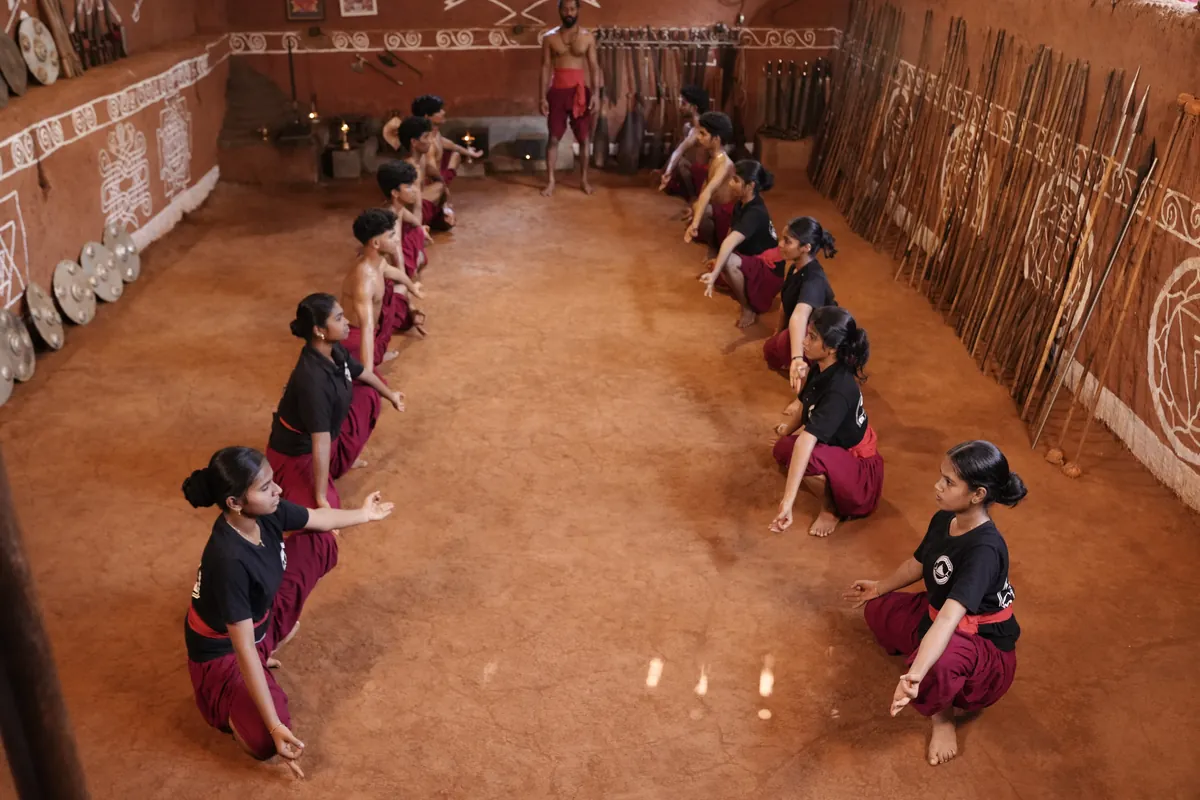
Beginners of every age train alongside returning students, and advanced students help guide beginners. You do not need any experience. There are no fixed batches: you start the day you arrive. Commands are in Malayalam and instructions are in basic English, and you will learn the words quickly.
FAQs
Q: What is the best age to learn Kalaripayattu?
A: The traditional starting age is 7, and children learn quickly. But adults of any age can learn well with steady practice and patience.
Q: Is there an age limit for Kalaripayattu?
A: There is no maximum age at Athma Kalari. The minimum is 7. You need to be willing to learn and physically able to train.
Q: Can I learn Kalaripayattu at the age of 30 or 40?
A: Yes. Many students start in their 30s and 40s. Flexibility takes longer, so be patient and never force a kick.
Q: Can a 7-year-old join a residential program?
A: Children from 7 can train at the gurukulam. Please contact us before booking so we can plan the stay with you.
Q: I have never done any sport. Can I still start?
A: Yes. No experience is needed. Training starts with simple body exercises and builds slowly.
Start at the age you are now
Our residential Kalari programs run from 2 weeks to 2 months, and Kalari Parijaya, 1 month, is the one most students choose. If you are planning for a child, or you have a health question, contact us first and we will help you plan.