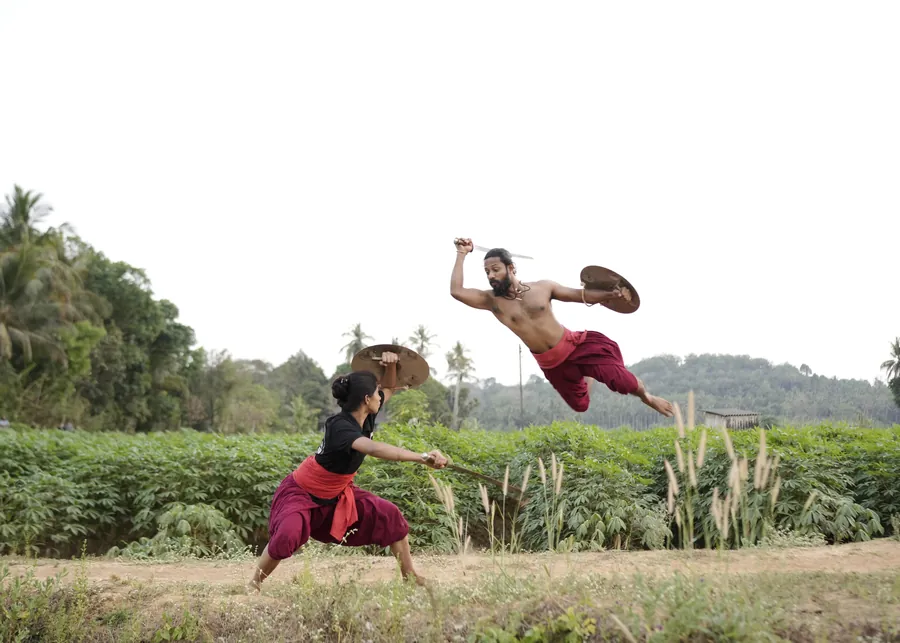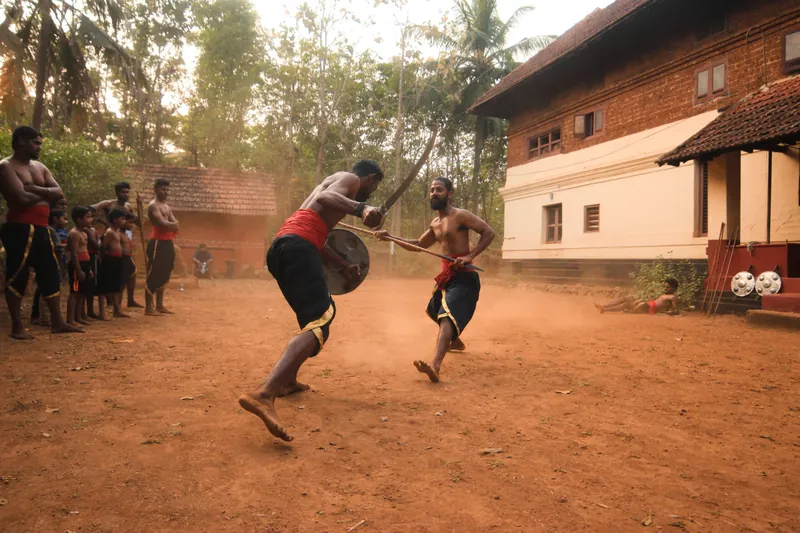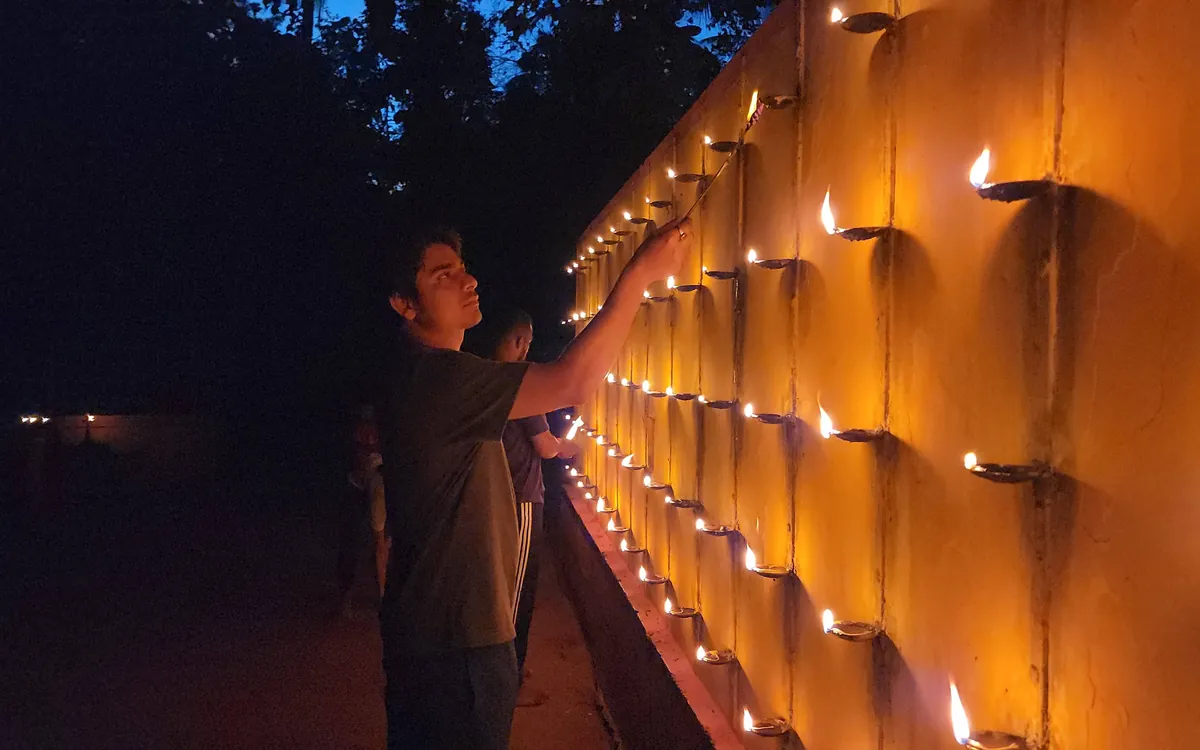
The best Kalaripayattu training in Kerala is the one with a real teacher from a living lineage, a traditional kalari to train in, and an honest plan for the time you have. Fame, a big website or a long list of programs matter much less.
Kerala has many kalaris, and India has more. Most of them teach with care. But they differ in style, in daily hours, in whether you can live in, and in how clearly they tell you what you will learn.
This checklist helps you compare any Kalari school. Use it to ask good questions before you book, so the place you choose fits your goals.
A checklist for choosing a Kalaripayattu school
1. The teacher and the lineage
Kalaripayattu has always passed from teacher to student, often inside a family. The teacher is called Gurukkal or Ashan. Ask who teaches the daily classes, how long they have practised, and who taught them.
A named teacher with a clear line of teachers behind them is a good sign. A school where the main teacher is rarely in the kalari is not.
2. A real kalari
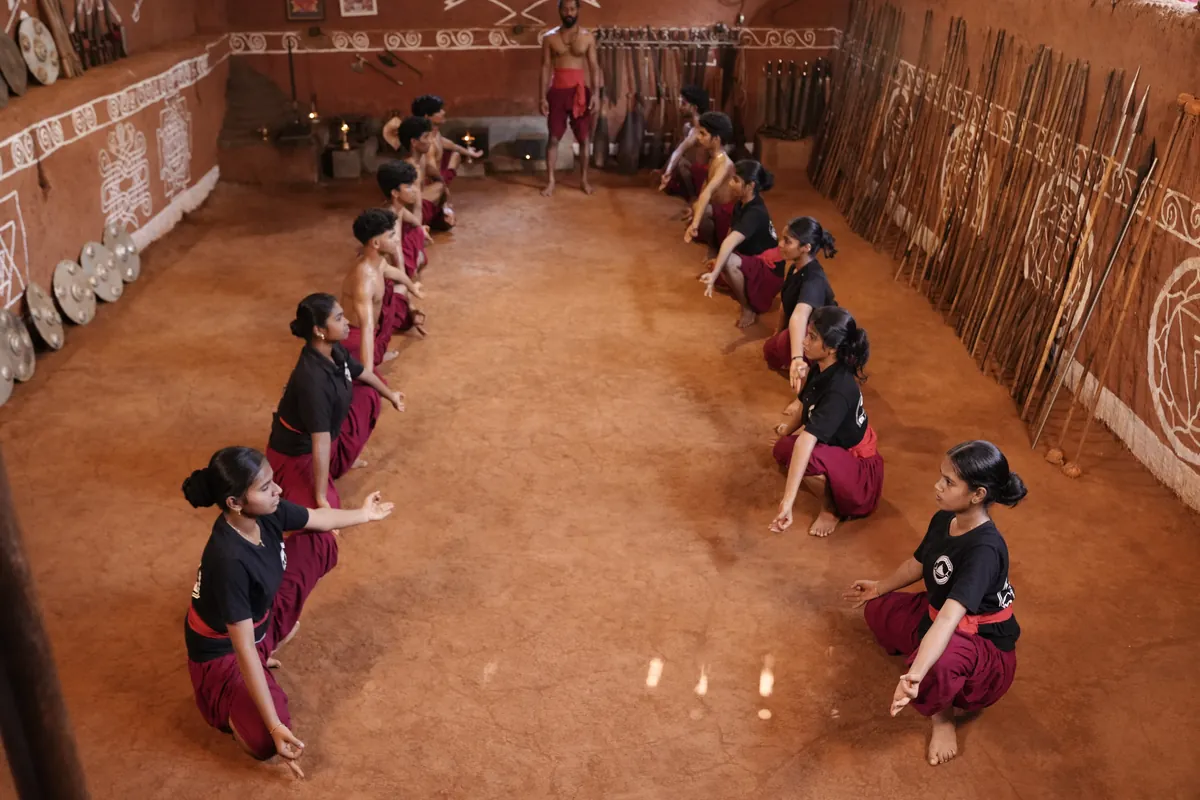
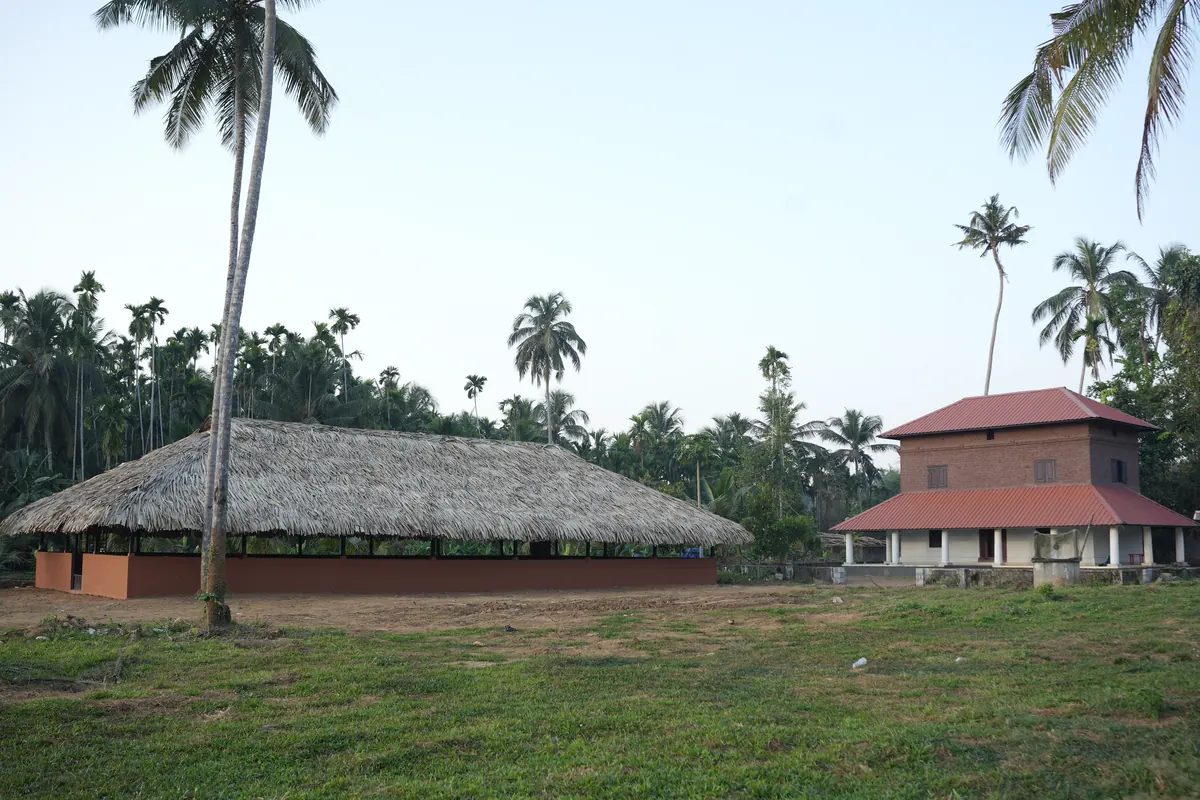
Traditional training happens in a kalari, a training hall built to set rules. The kuzhi kalari is a pit kalari, dug below ground level, with a floor of earth. In a corner stands the poothara, a 7-step platform for the guardian deity, which students salute before and after training.
You can learn movements in any hall. But the earth floor, the shape of the space and the daily customs are part of the art.
3. The style
The 2 best-known styles are Vadakkan (northern) and Thekkan (southern). Vadakkan Kalari is usually described as long and flowing, with high kicks, deep postures and a strong weapons syllabus. Thekkan Kalari is usually described as more focused on empty-hand work and close fighting. There are also central styles and many family variations. Read more on the types of Kalaripayattu.
Neither style is better. Just know which one you are signing up for.
4. How many sessions a day
Some kalaris run 1 class a day. Others train morning and evening. 2 sessions a day roughly double your training time. Repeating the same work later the same day also helps it settle in the body.
5. Class size and attention
Ask how many students train together and who corrects them. In the traditional way, beginners train next to senior students, and seniors help guide them. That works well, as long as the teacher still watches and corrects you.
6. Whether you can live in
If you are coming from far away, living in saves you daily travel and lets you train twice a day. Ask what rooms are available, what is included in the price, and what is not.
7. Food
Hard training needs simple, regular meals at the right times. Ask if meals are included, what kind of food is served, and when you eat in relation to training.
8. Treatment on site
Kalari Chikitsa, the healing side of Kalari, has always been part of a traditional kalari. A school that offers treatment on site, after a proper examination, can help you recover from hard days and look after small strains before they grow.
9. Honesty about what you will learn
A good school tells you plainly what you can learn in 2 weeks, 1 month or 2 months. It does not promise weapons or "mastery" in a short stay. Ask for the syllabus of the program you are thinking about.
10. What the certificate means
A certificate from a traditional kalari is the teacher's statement that you completed the training. It carries the weight of the teacher and the lineage. It is not a government licence. Ask what the certificate says and what you must do to earn it.
Questions to ask before you book
- Who will teach me every day, and how long have they practised?
- Which style do you teach?
- Do you train in a traditional kalari?
- How many sessions a day, and how long is each?
- What will I learn in the time I have?
- What is included in the price, and what costs extra?
- What happens to my money if I have to leave early?
- What do I need to do to get a certificate?
- Who looks after me if I get a strain or an injury?
Red flags
- No named teacher, or a teacher who is rarely present.
- Promises of mastery, weapons or a "black belt" level in a few weeks.
- A certificate that is sold rather than earned.
- Unclear prices, or extra fees that appear only after you arrive.
- No warm-up, or pressure to kick high on the first day.
- No way to ask questions before you pay.
How Athma Kalari answers the checklist
We wrote this list to help you compare honestly. Here is how we answer each point.
| Point | At Athma Kalari |
|---|---|
| Teacher and lineage | Ashan Vipin Das, 29 years of practice, 8th generation of a Valluvanad Kalari family. He founded Athma Kalari in 2005. |
| The kalari | A kuzhi kalari with a poothara. |
| Style | Vadakkan (northern). |
| Sessions a day | 2, at 5:30 AM and 5:30 PM, for 2 to 2½ hours each. Sundays off. |
| Attention | Beginners train next to returning students, and advanced students help guide beginners, under the Ashan's eye. |
| Living in | Residential programs from 2 weeks up to 1 year. Rooms from a dormitory (our basic option) to deluxe rooms and apartments. |
| Food | 3 South Indian vegetarian meals a day, included in the price. |
| Treatment | Kalari Chikitsa on site, after a consultation with Ashan Vipin Das. |
| Honest syllabus | A written syllabus for each program. The Ashan recommends 2 months as the shortest stay, and says learning Kalari fully takes decades. |
| Certificate | A completion certificate at the end of each residential program. At least 90% attendance is needed. |
You can read more about our lineage and founder, and about Kalari treatments at the gurukulam.
What about the best Kalari training in India?
The same checklist works anywhere in India or abroad. Kerala is the home of Kalaripayattu, so it has the deepest roots and the most traditional kalaris. If you can travel, training in Kerala lets you learn the art where it grew, with the food, climate and customs that shaped it.
People also search for the "oldest" Kalari training. The art itself is very old, and many kalaris are run by families who have taught for generations. Age alone does not make a school right for you. A living teacher who trains you well every day matters more.
FAQs
Q: Which is the best Kalaripayattu training in Kerala?
A: The best fit has a present, experienced teacher, a traditional kalari, a clear syllabus and honest prices. Use the checklist above to compare.
Q: Should I choose Vadakkan or Thekkan style?
A: Both are complete arts. Vadakkan is known for high kicks, flowing forms and weapons; Thekkan for empty-hand and close work. Choose the teacher first, then the style.
Q: What is a Kalari gurukulam?
A: A place where students live with or near the teacher and train every day. Learning happens through daily practice, discipline and close guidance, not only in classes.
Q: Do I need experience to join?
A: No. At Athma Kalari, beginners train alongside returning students from the first day.
Q: Is a Kalari certificate recognised?
A: It is the teacher's word that you completed the training, backed by the lineage. It is not a government licence.
See our residential programs
If our answers fit what you are looking for, see the syllabus and prices of our residential Kalari programs. You can also message us with your questions before you decide.