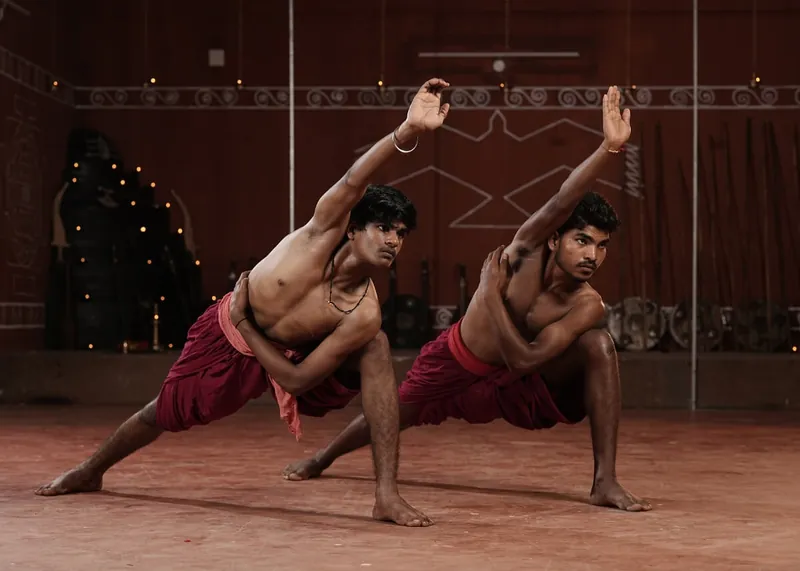
Kalaripayattu is a martial art from Kerala. Yoga is a path of self-knowledge from India, practised today mostly through postures and breathing. Both use postures and breath, and both train the mind as much as the body. But they have different aims, and they move in very different ways.
This is how a Kalari teacher sees the difference between Kalari and yoga, with respect for yoga and for the many people who practise both.
Kalaripayattu vs yoga at a glance
| Kalaripayattu | Yoga | |
|---|---|---|
| Purpose | A martial art: to prepare the body and mind for combat, with discipline and health along the way | Classically, to quiet the mind and know the self; today also widely practised for health |
| Movement | Dynamic: kicks, jumps, turns, low stances and flowing sequences | Mostly held postures (asanas), with flowing sequences in some styles |
| Breath | Follows the movement; steady in low stances, released with effort | Slow and controlled; breath practice (pranayama) is a full practice of its own |
| Pace | Fast and explosive at times, slow and controlled at others | Usually slow and steady; varies by style |
| The ground | A kuzhi kalari: a pit with an earth floor and a poothara, a small shrine | Any quiet, clean space, usually on a mat |
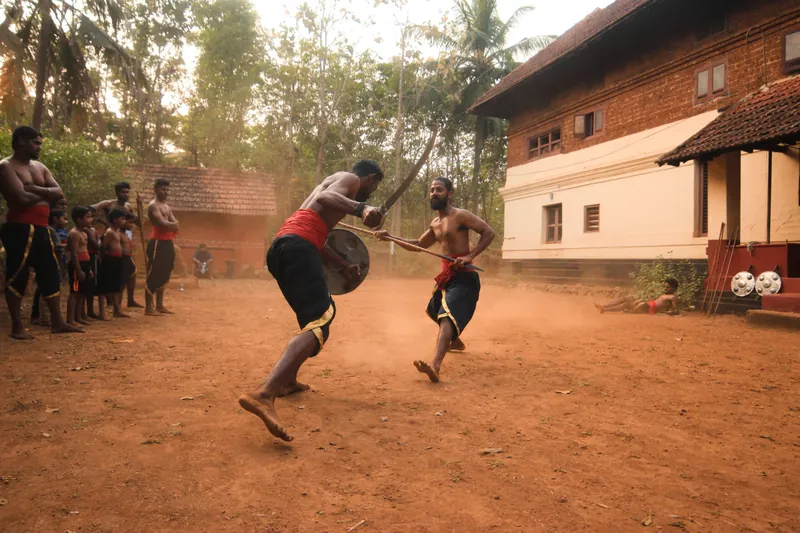
| Weapons | Central: wooden weapons, then metal weapons, after years of body training | None |
| Healing tradition | Kalari Chikitsa: oil massage, marma therapy and bone setting | Often practised alongside Ayurveda; yoga therapy is a growing field |
Purpose: why each practice exists
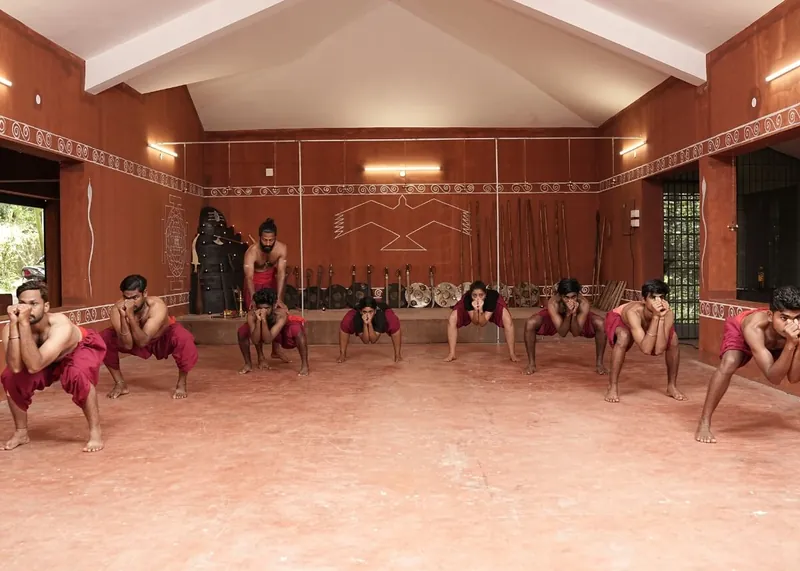
Kalari was developed to train fighters. Everything in the body training leads towards using weapons and defending yourself. Today, most students come for fitness, discipline and culture, but the movements still carry that martial purpose. A Kalari posture is a ready position: you move out of it to strike, block or step away.
The classical aim of yoga is inward: to still the mind. The postures prepare the body to sit comfortably for breath work and meditation. Kalari has an inner side too. Focus is trained in every session, and at Athma Kalari there is a guided meditation every Tuesday. Read more about the role of meditation in Kalaripayattu.
Movement and pace
In a Kalari session, you are rarely still for long. Kicks, footwork, jumps and body sequences flow into each other. The flexibility Kalari builds is used at speed: a high kick, a deep lunge, a fast turn.
In most yoga classes, you hold a posture and breathe into it. Long holds build deep, quiet flexibility. Both build strength, but Kalari asks for more power and speed, and yoga asks for more stillness.
Breath
Both practices treat breath as central. In Kalari, breath follows the movement. You learn to keep breathing steadily in a deep stance, and to release the breath with a strong movement. In yoga, breath is often slowed and controlled on purpose, and pranayama is studied as its own practice.
The ground and the space
Kalari is traditionally practised in a kuzhi kalari, a pit with a floor of packed earth. Students train barefoot on the earth and salute the space, the poothara and the teacher with the Kalari Vandanam before and after class. Yoga can be practised almost anywhere, usually on a mat.
What Kalaripayattu and yoga share
Postures
Both build strength and control by shaping the body into exact positions. Both ask for correct alignment, and both take years to refine.
Breath and focus
In both, a distracted mind shows in the body. Both teach you to bring the attention back, again and again.
The animal forms
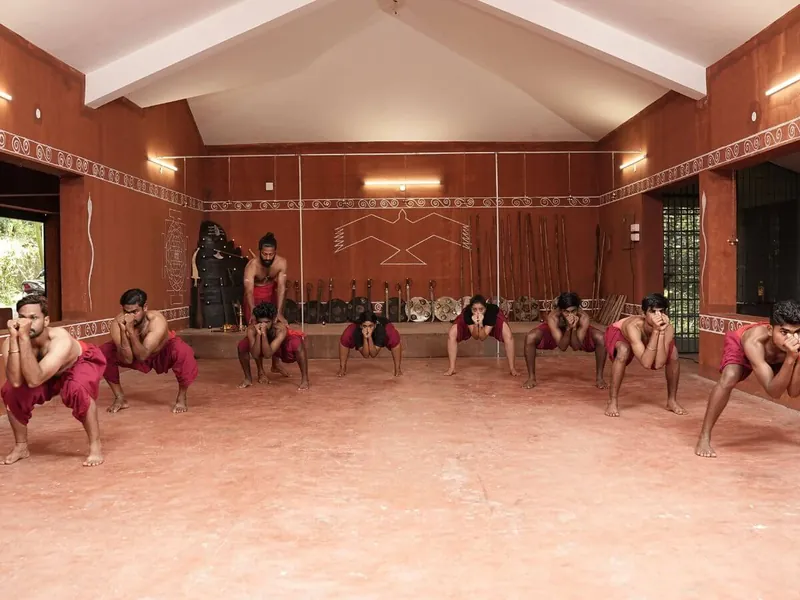
Kalari has the vadivu, animal postures such as the elephant, lion, horse and snake. Yoga also has postures named after animals, such as the cobra, cat and eagle. Both learn from how animals move and hold themselves. The difference is that a Kalari vadivu is alive with readiness: from the lion posture, you are ready to spring. Read about the animal postures in our guide to Vadivukal.
Practising Kalari and yoga together
Many people practise both, and they can support each other well.
- Yoga can deepen flexibility. Long, gentle holds on rest days can help the hips and the backs of the legs open for kicks.
- Kalari adds power and footwork. It brings speed, jumps, coordination and a sense of distance that yoga does not usually train.
- Both train breath awareness. Each one makes the other easier to learn.
A few practical points if you do both:
- Keep your Kalari training days for Kalari. Gentle yoga on a rest day, such as Sunday, works well.
- Kalari stances keep the knees soft and the weight low. This can feel new if you are used to straight-legged standing postures.
- Tell the teacher you practise yoga, and mention any injury.
Which one should you choose?
If you want stillness, slow stretching and a calm daily practice, yoga is a good fit. If you want to move fast, jump, kick and learn a martial art with a long tradition, choose Kalari. If you want both, there is no need to choose.
FAQs
Q: Is Kalaripayattu a form of yoga?
A: No. It is a martial art. It shares postures, breath and focus with yoga, but its aim and its movements are different.
Q: What is the main difference between Kalari and yoga?
A: Kalari trains the body to move fast and with power, leading towards weapons and combat. Yoga mostly uses held postures and breath to calm the mind.
Q: Can I do yoga and Kalari together?
A: Yes. Many people do. Gentle yoga on rest days can support flexibility, and Kalari adds strength, speed and footwork.
Q: Is Kalari harder than yoga?
A: It is usually more physically demanding, with jumps, kicks and deep stances. But both can be practised at your own level.
Q: Does Kalari include meditation?
A: Yes. Focus is part of every session, and at Athma Kalari there is a guided meditation every Tuesday.
Try Kalari for yourself
If you practise yoga and want a first taste of Kalari, our 7-day online Kalari workshop runs from the 1st to the 7th of every month. To train fully in a kuzhi kalari, see our residential Kalari programs in Kerala.