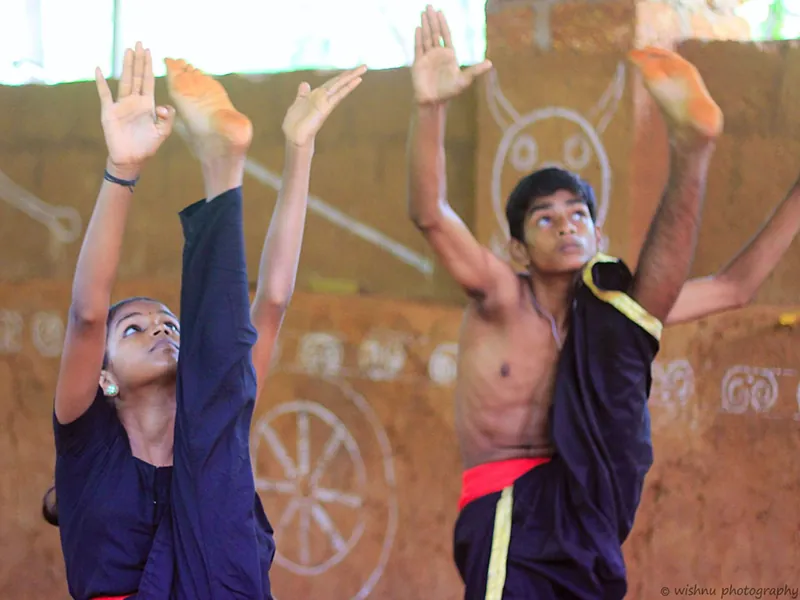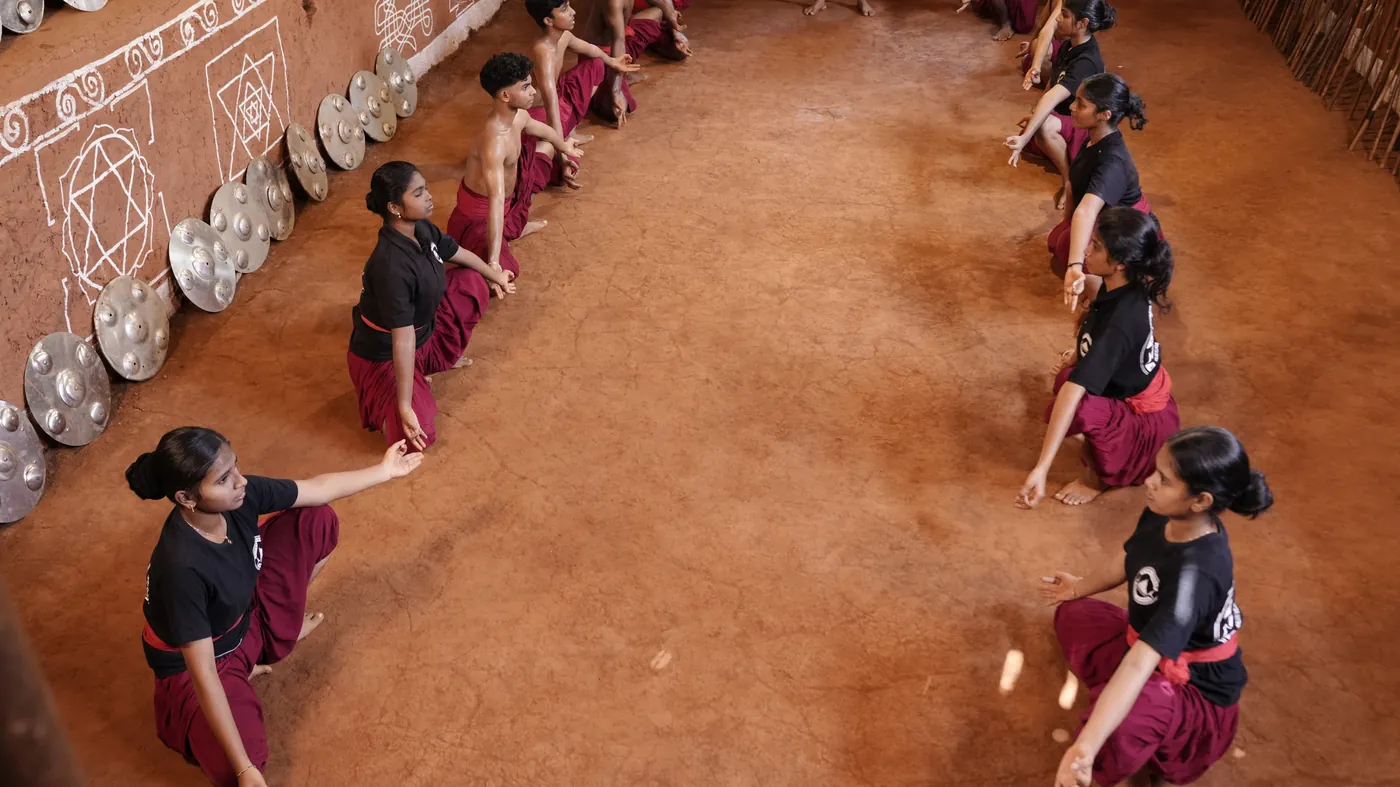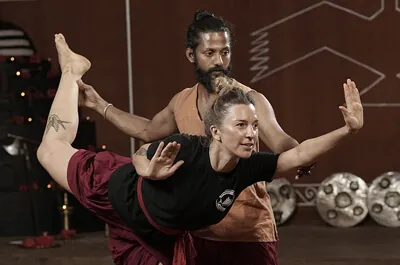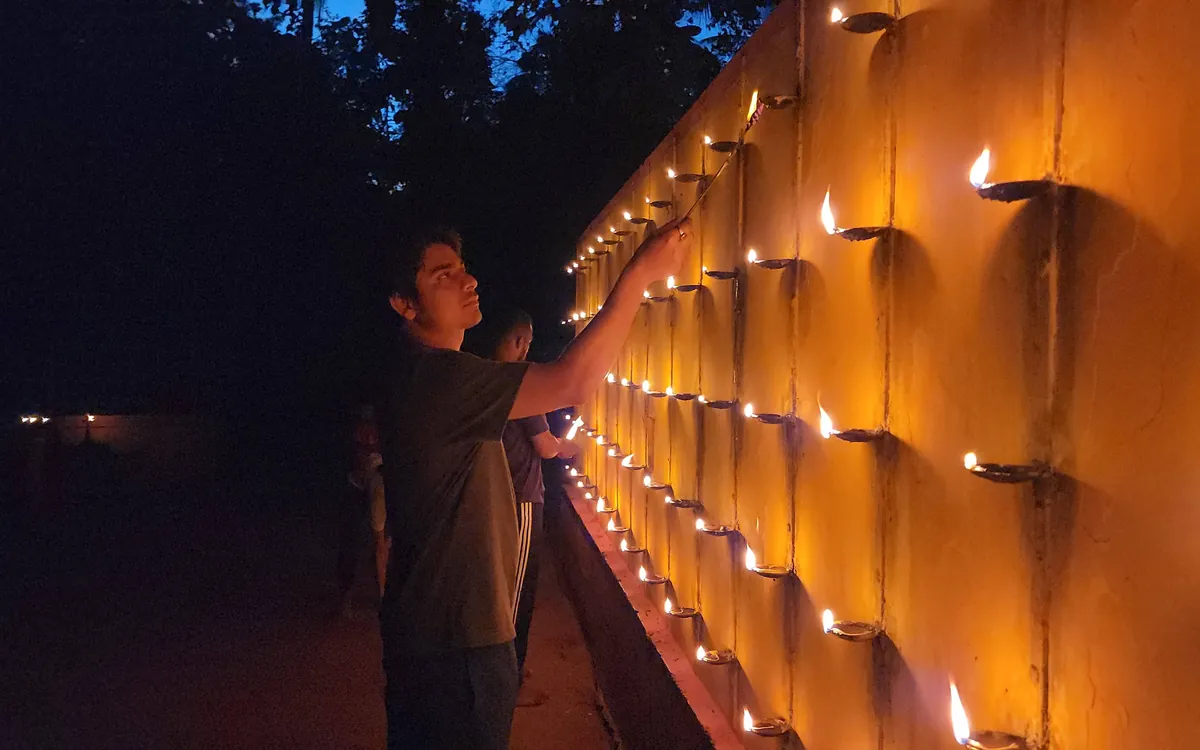
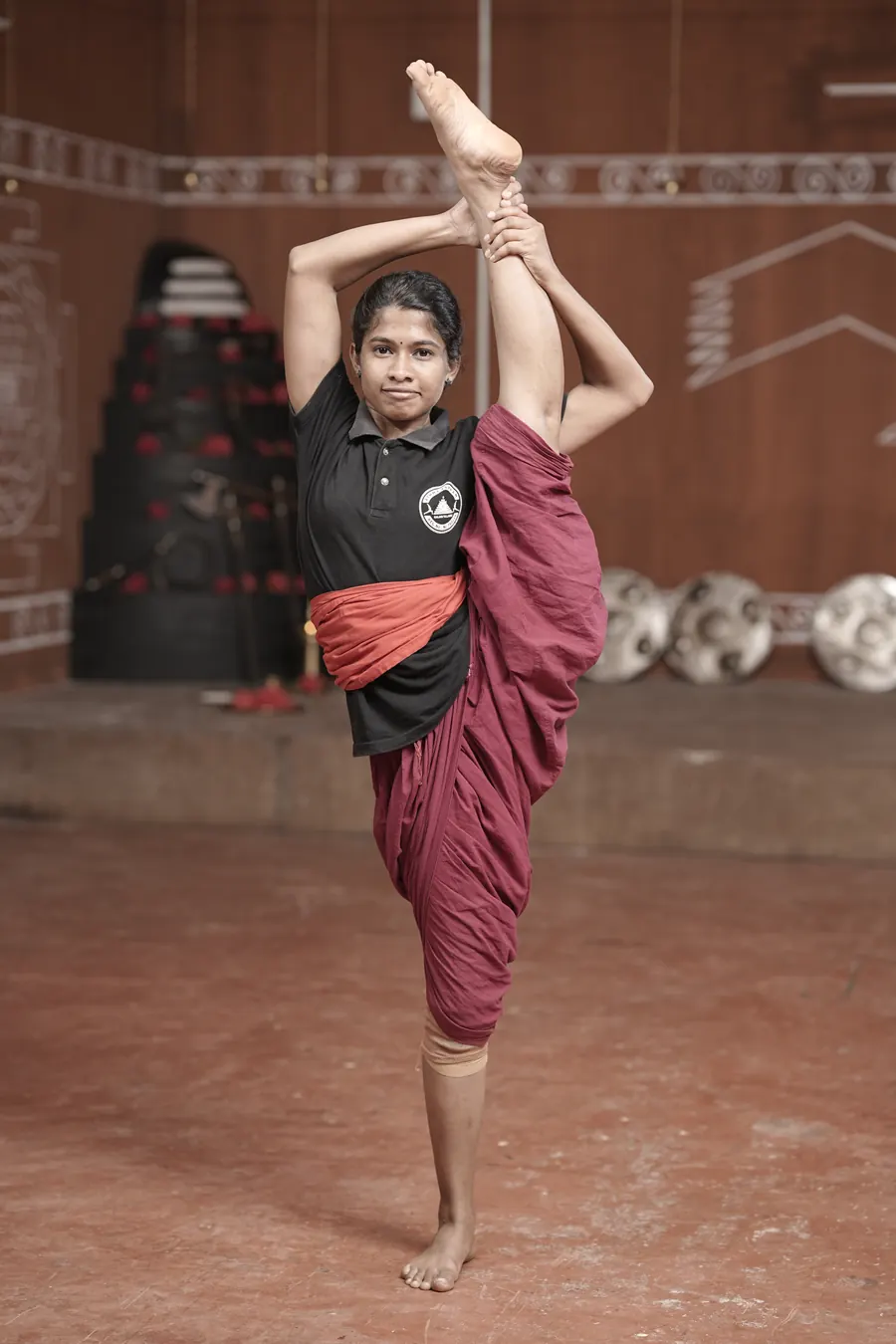
Meithari is the first stage of Kalaripayattu. It trains the body before any weapon is used. You may also see it spelt Meythari. Mey is the Malayalam word for body.
In Meithari you learn the basic exercises, kicks, steps, postures and sequences of Kalaripayattu. Every later stage is built on them. A student who skips this stage has nothing strong to stand on.
This guide explains each part of Meithari, how it is practised, and the mistakes most beginners make.
Where Meithari fits in Kalaripayattu
Kalaripayattu is usually taught in 4 stages. Meithari is body training. Kolthari is training with wooden weapons. Angathari is training with metal weapons. Verumkai is bare-hand fighting.
Meithari never really ends. Senior students and teachers still practise it every day. The kicks and postures you learn in your first week are the same ones you will use with a stick or a sword years later.
The main parts of Meithari
Most kalaris teach Meithari in a set order. The names can differ a little from one tradition to another, but the main parts are the same.
| Part | Malayalam name | What it trains |
|---|---|---|
| Warm-up | - | Joints, muscles and breath, ready for hard work |
| Salutation | Kalari Vandanam | Respect, focus and the first basic movements |
| Kicks | Kaalukal | Leg strength, flexibility and balance |
| Steps | Chuvadu | Footwork, direction and timing |
| Postures | Vadivu | A low, strong base and steady hips |
| Sequences | Meypayattu | Joining kicks, steps, turns and jumps into one flow |
Warm-up and Kalari Vandanam
Each class starts with a Kalari warm-up. It loosens the hips, knees, ankles, spine and shoulders. It also wakes up the breath. After this comes the Kalari Vandanam, a salutation to the kalari, the teacher and the tradition. Its movements already contain low postures and careful steps.
Kaalukal: the kicks
Kaalukal are leg swings and kicks done while walking up and down the kalari. Some go straight up. Some go to the side or across the body. Some move in a circle, inward or outward. The leg stays long, the body stays upright, and the standing foot stays rooted. At first they build flexibility. Later they build power and control. Read more in our guide to Kaalukal, the kicks of Kalaripayattu.
Chuvadu: the steps
Chuvadu is footwork. Each pattern moves you forward, back, to the side or around, while you keep a low and steady body. Good footwork lets you change direction without losing balance. Our article on Chuvadu and Kalari footwork explains the patterns in more detail.
Vadivu: the postures
Vadivu are the postures of Kalaripayattu. Many are named after animals, such as the elephant, the lion, the horse and the snake. Each one teaches a different way to hold your weight, guard your body and get ready to move. Holding them builds strong legs and a steady centre. See Vadivukal, the animal postures.
Meypayattu: the sequences
Meypayattu are set sequences that join everything together. Kicks, steps, postures, turns and jumps follow each other in a fixed order. You learn them one at a time, slowly at first. They train memory, stamina and flow. Read Understanding Meypayattu for more.
Jumps, flexibility and breath
Meithari also includes jumps. Some are high jumps with a kick at the top. Some are turning jumps that land in a low posture. You learn to land softly, with bent knees, and to go straight into the next movement.
Flexibility grows slowly. It comes from daily kicks and postures, not from forcing a stretch. Hips, hamstrings and the spine open over weeks and months.
Breath links it all. Teachers ask you to breathe steadily through each movement and never to hold your breath in a hard posture. With practice, breath and movement start to work together. This is one reason many people find Kalari training calming as well as tiring.
The oil massage that supports Meithari
In the Kalari tradition, body training and oil massage go together. Uzhichil is a medicated oil massage given with the palms or the feet. It is used to ease tired muscles and to support flexibility during hard training. Some students take a course of massage while they train. Learn more about Uzhichil, the Kalari massage.
Massage is not part of the program price at Athma Kalari. Ashan Vipin Das can advise you if it would help your training.
Common beginner mistakes
Almost every beginner makes some of these. Knowing them early saves time and protects your body.
- Kicking for height. A high kick with a bent leg or a falling body is not a good kick. Keep the form first. Height comes later.
- Lifting the heels in postures. In Vadivu the feet stay flat and rooted. Lifted heels mean the weight is in the wrong place.
- Locking the knees. Keep the joints soft, in kicks and in landings.
- Holding the breath. Breathe steadily, even when a posture is hard.
- Skipping the warm-up. Cold muscles are easy to strain.
- Training on a full stomach. Eat lightly before class and leave time to digest.
- Rushing to new sequences. Repeat what you know until it is clean. Your teacher will add more when you are ready.
- Comparing yourself to others. Each body opens at its own speed.
How long Meithari takes
You can learn the first kicks, steps and postures in a few weeks. Making them strong and clean takes much longer. Ashan Vipin Das recommends 2 months as the shortest stay for real progress. Learning Kalari fully takes decades.
At the gurukulam, Meithari is the heart of the residential programs. Kalari Praramba (2 weeks) covers the warm-up, Vandanam, 6 Kaalukal, 1 Chuvadu, 1 Chumattadi, 1 Meypayattu and Vadivu. Kalari Parijaya (1 month) adds more kicks, steps and sequences. Kalari Parisrema (2 months) goes further and adds an introduction to Cheruvadi, the short stick.
FAQs
Q: What is Meithari in Kalaripayattu?
A: Meithari is the first stage of Kalaripayattu. It is body training: warm-up, kicks, steps, postures and sequences, done before any weapon is used.
Q: Is Meithari the same as Meythari?
A: Yes. They are 2 spellings of the same Malayalam word. Mey means body.
Q: What are the basic Kalaripayattu exercises?
A: The warm-up, Kalari Vandanam, Kaalukal (kicks), Chuvadu (steps), Vadivu (postures) and Meypayattu (sequences). Jumps and breath work are part of them.
Q: Do I need to be flexible to start Meithari?
A: No. Flexibility is built by the training itself. You start where your body is today.
Q: Can I practise Meithari at home?
A: You can practise the basics you have been taught. New sequences and corrections need a teacher who can see you.
Start Meithari at the gurukulam
You do not need any experience. You start the day you arrive, and you train twice a day in a traditional kuzhi kalari. See the residential Kalari programs to choose 2 weeks, 1 month or 2 months.