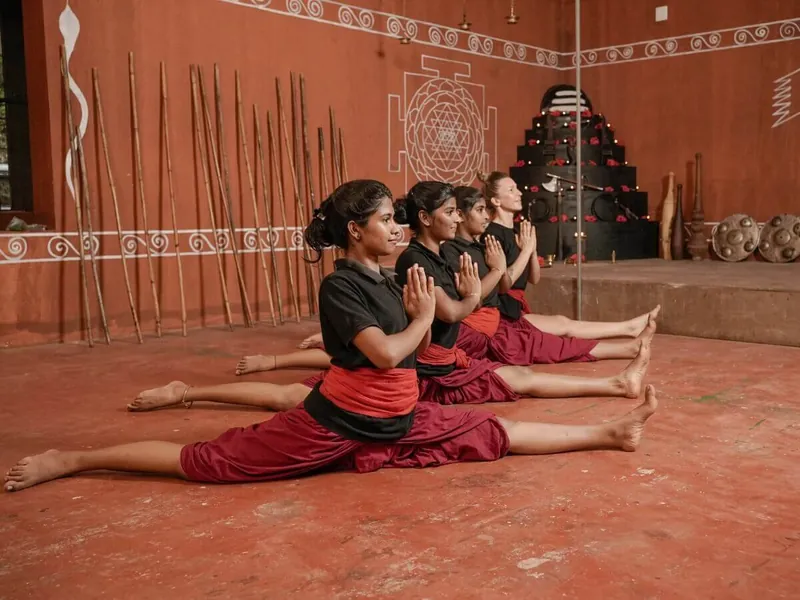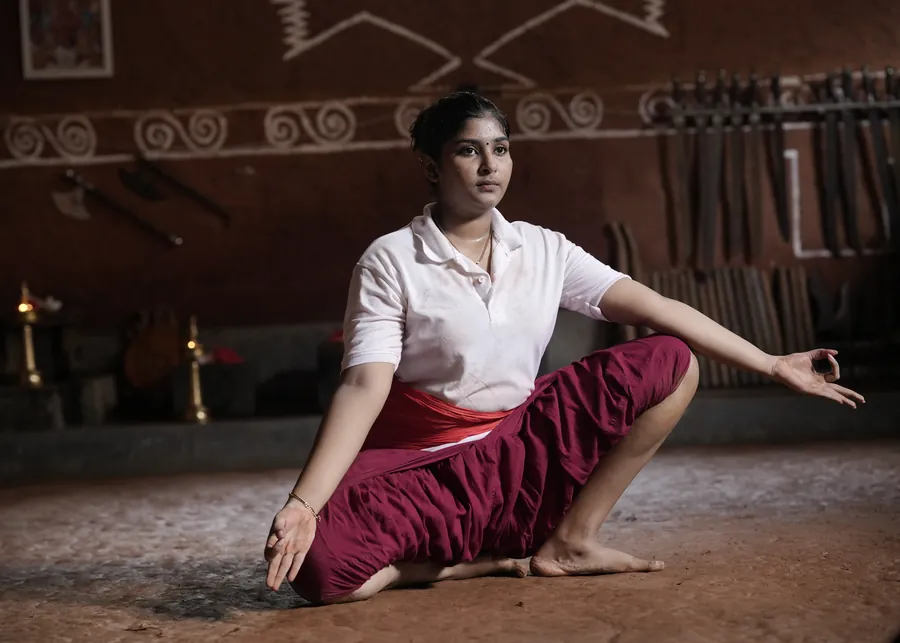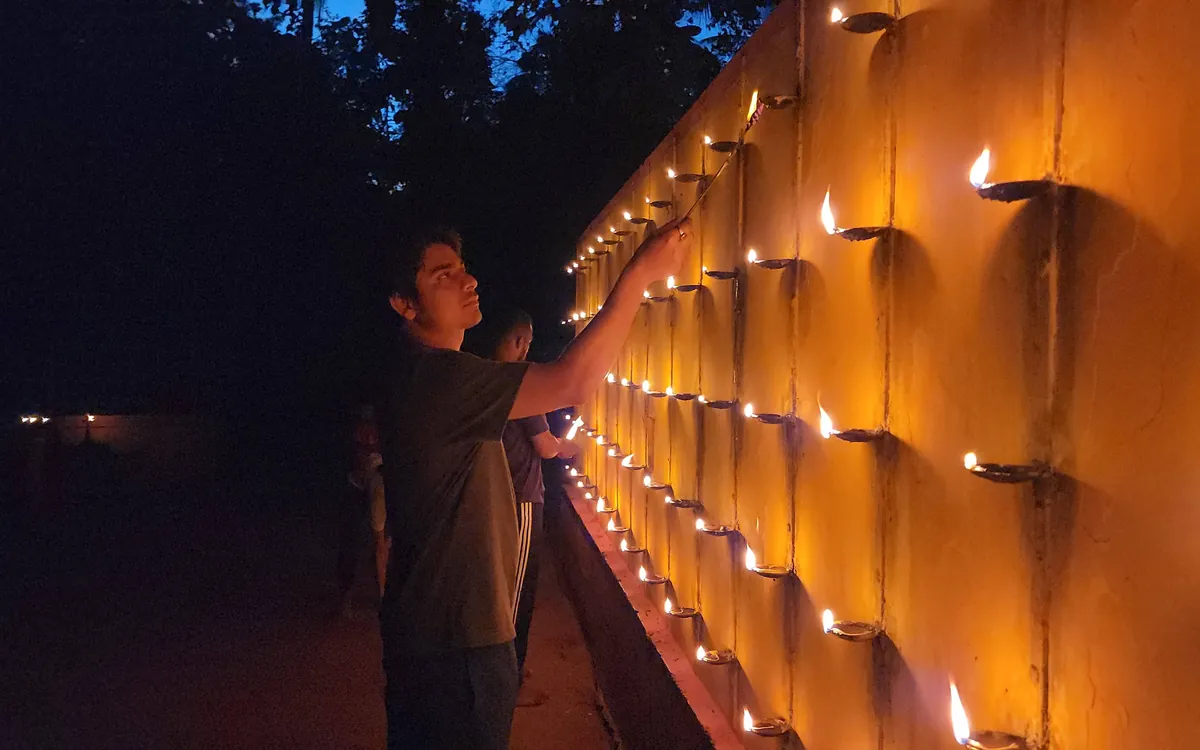
The most important Kalari diet rule is about timing: train on an empty stomach. Do not eat a full meal in the 2½ to 3 hours before practice. After training, eat simple, fresh food and drink plenty of water.
There is no special Kalaripayattu diet you must follow. At Athma Kalari, students eat 3 South Indian vegetarian meals a day, timed around the 2 training sessions. This guide explains how that day works, what to eat if you train at home, and a few Kerala foods worth knowing.
Why you train on an empty stomach
Kalari training uses deep stances, jumps and kicks, and you bend forward and back many times. Your belly is worked hard. With a full stomach, you feel heavy and slow, and you may feel sick or get a cramp. Your body cannot digest a big meal and train hard at the same time.
So what should you eat before Kalari practice? Ideally, nothing heavy. A glass of water is fine. If you often feel weak or dizzy in early classes, tell the teacher. A small piece of fruit, well before class, may be enough.
A day of meals at the gurukulam
At the gurukulam, the timetable already follows the empty-stomach rule.
| Time | What happens |
|---|---|
| 5:30 AM | Morning training, 2 to 2½ hours, on an empty stomach |
| 9:30 AM | Breakfast |
| 1:30 PM | Lunch |
| 5:30 PM | Evening training, 2 to 2½ hours |
| 8:30 PM | Dinner |
Breakfast comes after the morning session, when the body is ready for food. There are 4 hours between lunch and evening training, so the stomach is light again by class time. Dinner comes after the evening session.
What the food is like
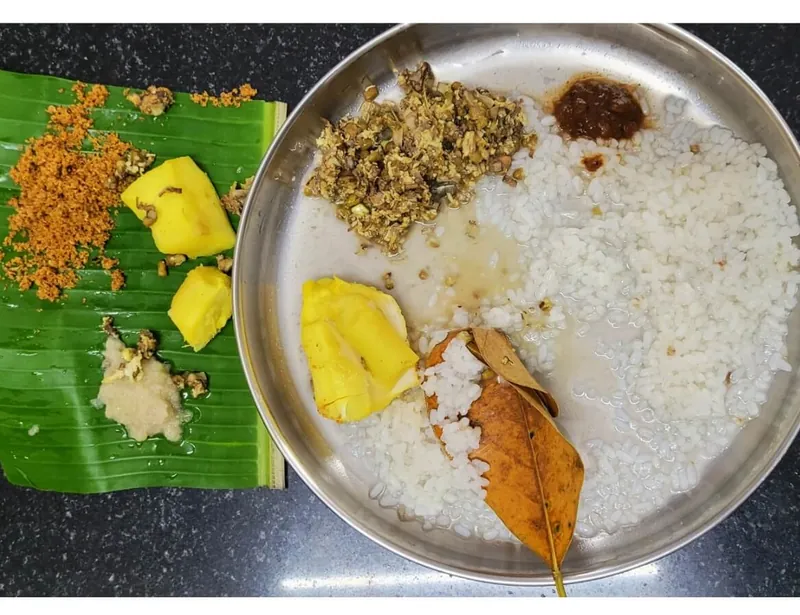
All 3 meals are South Indian vegetarian food, simple and freshly cooked. Typical Kerala vegetarian dishes include rice with sambar, thoran (vegetables cooked with grated coconut), avial, idli, dosa, puttu with kadala curry, and upma. You will not find all of these every day, but you will eat in this style.
If you have a food allergy or a special diet, please tell us before you arrive so we can tell you what is possible. You can read more about the food and rooms on our accommodation page.
Simple Kerala food that suits training
Kalari food does not need to be special. It needs to be simple, fresh and enough. A few practical points:
- Rice and lentils give steady energy. Lentils, chickpeas and beans also give protein to vegetarians.
- Vegetables, cooked lightly, are the heart of most Kerala meals.
- Curd and buttermilk are everyday Kerala foods and are light on the stomach.
- Bananas and fresh fruit are easy to digest and easy to find in Kerala.
- Fried and very sweet food is best kept small, especially on training days.
Eat until you are satisfied, not until you are full. A heavy dinner makes it hard to sleep well and to wake up for 5:30 AM training.
Hydration and coconut water
Kerala is warm and humid, and you will sweat a lot in the kalari. Drink water through the whole day, not a large amount just before class. If your urine is dark, you need more water.
Coconut water is a good, natural drink after training. It replaces fluid and contains natural salts that are lost in sweat. Tender coconuts are sold almost everywhere in Kerala.
Karkkidaka kanji: the monsoon herbal porridge
Karkkidakam is the Malayalam month that falls in the monsoon, around mid-July to mid-August. In Kerala, it is traditionally a time to slow down and care for the body. Many families eat Karkkidaka kanji during this month: a rice porridge cooked with a mix of herbs.
The kanji is light, warm and easy to digest. It is traditionally eaten to support the body through the rainy season. It is food, not medicine, and it is not a treatment for any condition. If you would like to try it at home, our Karkkidaka Oushadha Kanji herbal porridge mix is in the shop. Follow the cooking instructions on the pack.
Avoiding alcohol
There is no smoking or alcohol on the gurukulam premises. Even outside, it is best to avoid alcohol while you are training. It dries out the body, disturbs your sleep and makes early mornings much harder. Training twice a day asks a lot of the body, and it recovers best with water, food and sleep.
If you train at home or online
The same rules apply at home. Our online Kalari workshop runs live from 6 to 7 AM IST, and we ask students not to eat a full meal in the 2½ to 3 hours before class. For a morning class, that simply means training before breakfast.
- Drink a glass of water when you wake up.
- Train first, then eat a simple breakfast.
- For an evening class, eat lunch early and keep the afternoon snack small.
FAQs
Q: What should I eat before Kalari practice?
A: Ideally nothing heavy. Do not eat a full meal in the 2½ to 3 hours before class. Water is fine.
Q: Is there a special Kalari diet?
A: There is no fixed diet you must follow. Simple, fresh food, enough water and good sleep matter most.
Q: Do I need to be vegetarian to train at Athma Kalari?
A: All meals at the gurukulam are South Indian vegetarian. What you eat at home is your choice.
Q: Is coconut water good after training?
A: Yes. It is a natural way to replace fluid after sweating, and it is easy to find in Kerala.
Q: What is Karkkidaka kanji?
A: A herbal rice porridge traditionally eaten in Kerala during the monsoon month of Karkkidakam. It is simple, light food, not a treatment.
Q: Can I drink alcohol during my stay?
A: No. There is no smoking or alcohol on the premises, and it is best avoided while you are training.
Train and eat the Kerala way
At the gurukulam, your meals, training and rest already fit together. All residential programs include training, a stay in the dormitory and all meals. See the residential Kalari programs to choose your dates.